When Algorithms Dream: Generative Adversarial Networks Crafting Personalized Quest Lines in Mobile RPGs
Written by Cameron Krause · Aug 19, 2026
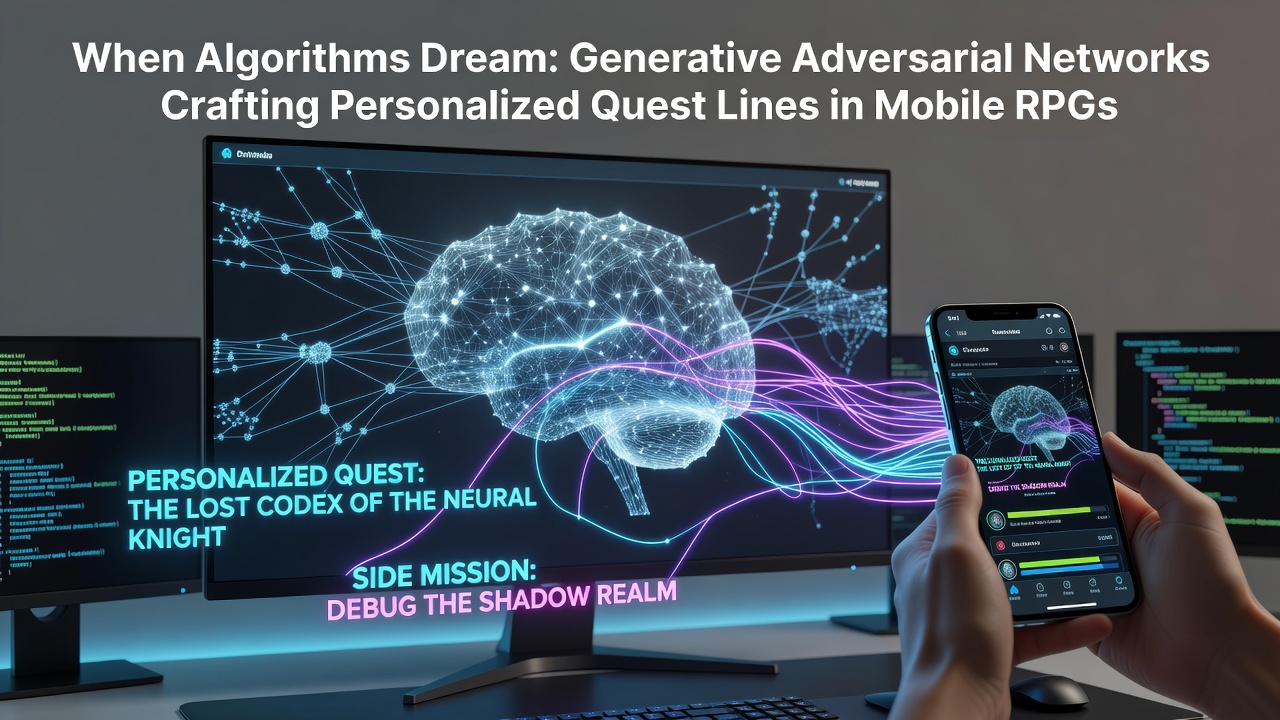
When Algorithms Dream: Generative Adversarial Networks Crafting Personalized Quest Lines in Mobile RPGs
Generative adversarial networks operate through two neural networks locked in continuous competition, with one generating content while the other evaluates its quality against existing datasets. In mobile RPGs this architecture produces quest lines that adapt to individual player patterns, including combat preferences, exploration habits, and narrative choices tracked across sessions. Researchers at institutions such as Stanford University have documented how these systems train on anonymized telemetry to output quests that maintain internal consistency while diverging from preset templates.
Developers integrate GANs into mobile pipelines by feeding player behavior vectors into the generator component, which then assembles objectives, rewards, and dialogue branches. The discriminator component scores each generated quest for balance and engagement signals derived from historical play data. This loop repeats thousands of times per training cycle, refining output until quests align with observed retention metrics. In August 2026 several studios reported live deployments where GAN-generated quests accounted for up to thirty percent of daily player activity in top-grossing titles.
Technical Architecture Behind Quest Personalization
Mobile RPG engines pass compressed player profiles through the GAN framework, where latent space representations capture variables such as average session length, preferred quest difficulty, and social interaction frequency. The generator synthesizes new quest graphs that incorporate these variables, while the discriminator flags outputs that deviate from successful patterns seen in millions of prior completions. Training occurs on-device or via edge servers to respect data caps, with periodic model updates delivered during low-traffic windows. Industry reports from the Entertainment Software Association note that such implementations have reduced manual quest authoring time by measurable margins in mid-sized development teams.
Quest elements generated this way include branching dialogue trees, dynamic enemy placements, and reward schedules that shift based on prior failures or successes. One documented case involved a fantasy RPG where the system created a side quest involving rare herb collection after detecting repeated player interest in crafting mechanics. The resulting quest integrated seamlessly with existing world lore because the discriminator filtered outputs lacking narrative coherence.
Data Inputs and Training Dynamics
Player data streams encompass in-game coordinates, item interaction logs, and quest completion timestamps, all stripped of personally identifiable information before entering training sets. These inputs allow the GAN to recognize clusters of similar playstyles and generate quests that either reinforce or gently expand those clusters. Studies published through the IEEE Conference on Games indicate convergence typically occurs after exposure to several hundred thousand player sessions, at which point the generator produces quests rated comparably to human-designed content on engagement metrics.
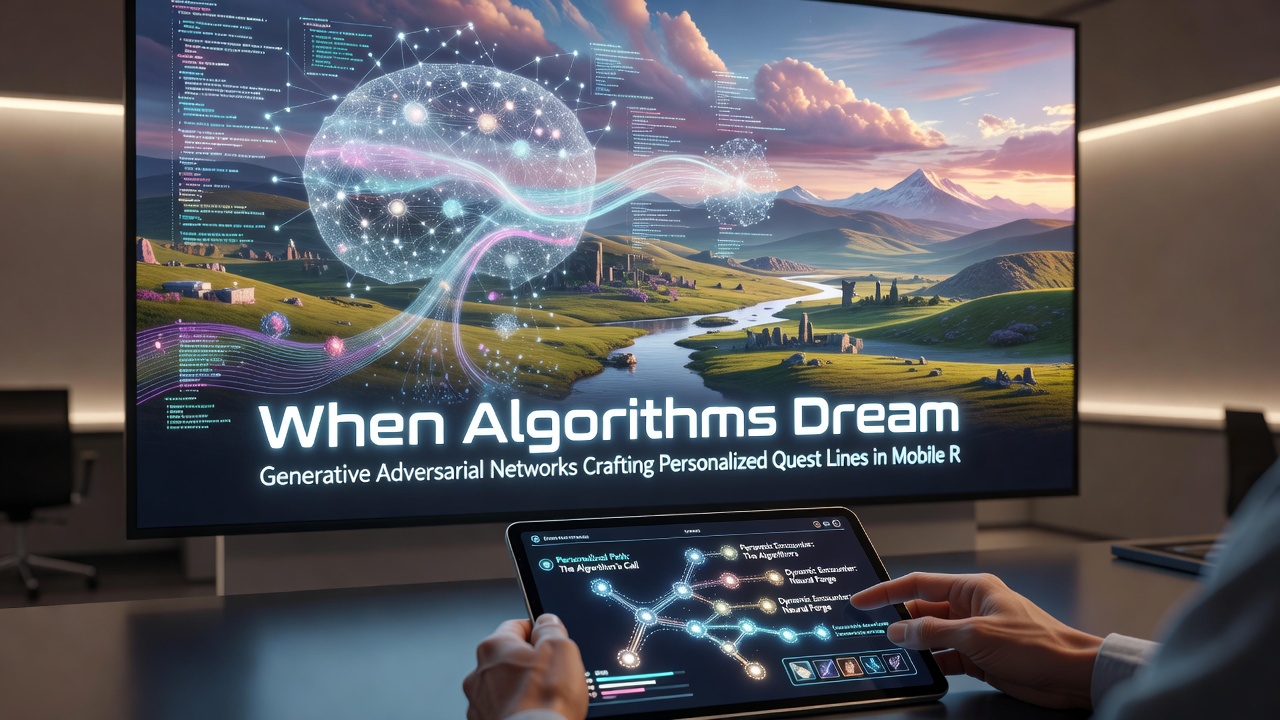
Training pipelines also incorporate negative examples, such as quests abandoned at high rates, to steer the generator away from repetitive or overly punishing structures. This adversarial refinement produces variety without sacrificing core progression systems that mobile players expect. Observers note that the resulting quests often contain subtle callbacks to earlier player actions, creating a sense of continuity across play sessions separated by days or weeks.
Deployment Patterns in Live Mobile Titles
Studios release GAN modules as lightweight updates that activate after initial player profiling periods of roughly five to seven sessions. The system then begins surfacing personalized quests alongside traditional content, maintaining a mix that prevents over-reliance on generated material. European regulatory frameworks require clear disclosure of algorithmic content generation in app stores, prompting developers to include optional toggles that revert players to static quest pools. Figures from the Interactive Software Federation of Europe reveal adoption rates climbing steadily through 2025 and into 2026 as hardware capabilities on mid-range devices improved.
Performance constraints on mobile hardware necessitate quantized model versions that run inference within tight memory budgets. Developers address this by pruning less critical layers and caching frequently requested quest archetypes locally. These optimizations allow real-time quest adjustments during active play without introducing noticeable latency, preserving the fluid experience mobile users demand.
Conclusion
Generative adversarial networks continue to expand the range of possible quest experiences available in mobile RPGs by leveraging competitive training dynamics between generator and discriminator networks. Data from multiple industry sources shows measurable reductions in content creation overhead alongside increased player retention signals when these systems operate within established design guardrails. As device capabilities advance and regulatory clarity improves, further integration appears likely across additional genres and platforms.