Voice-Driven Narrative Branching via On-Device Speech Recognition Reshaping Choice-Based Mobile Visual Novels
Written by Cameron Krause · Jul 10, 2026
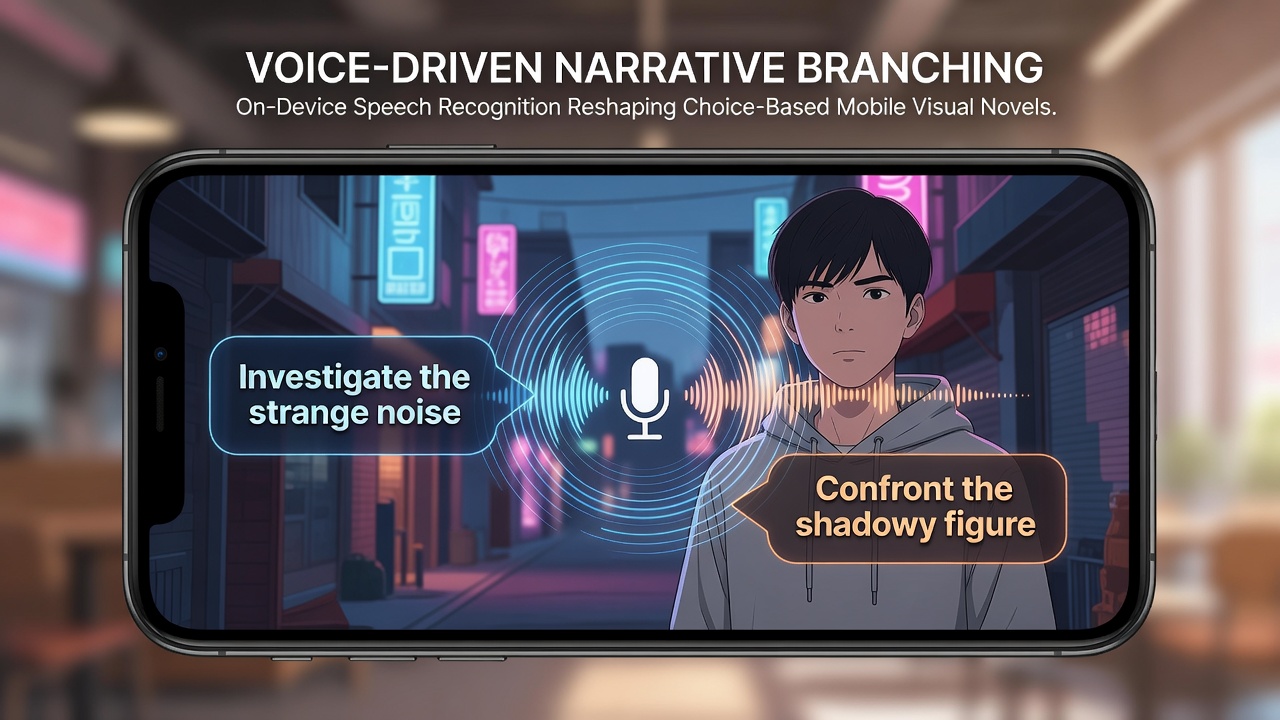
Voice-Driven Narrative Branching via On-Device Speech Recognition Reshaping Choice-Based Mobile Visual Novels
Choice-based mobile visual novels have long relied on tap selections to advance stories yet on-device speech recognition now introduces spoken inputs that trigger branching paths in real time. Developers integrate lightweight models directly onto smartphones so players utter responses that the system interprets without sending audio to external servers. This setup supports faster processing while keeping data localized on the device.
Mechanics Behind On-Device Processing
Speech recognition engines run through optimized neural networks that fit within mobile hardware constraints, and they handle accents plus varied phrasing by drawing from extensive training datasets collected over prior years. When a player speaks a line such as "I choose to trust the stranger" the model maps keywords and intent to predefined story nodes then loads the corresponding scene without noticeable delay. Battery usage stays manageable because the models activate only during dialogue windows rather than continuously.
Privacy and Latency Advantages
On-device execution avoids cloud round-trips so narrative responses occur within fractions of a second and sensitive voice data never leaves the handset. Reports from the Entertainment Software Association note that privacy-conscious features like these have appeared in multiple entertainment applications by mid-2026. Developers achieve this by compressing transformer-based models to run on standard chipsets found in devices released after 2024.
Players encounter fewer interruptions during intense story moments because the system processes commands locally even when network signals fluctuate. Research indicates that this reliability encourages longer play sessions in titles where emotional decisions hinge on timing.
Narrative Branching Expands Through Voice Inputs
Traditional choice systems limit options to three or four on-screen buttons yet voice recognition opens dozens of potential responses within the same scene. Writers craft dialogue trees that account for synonyms and partial sentences so saying "run away now" or "I need to escape" both route to the same escape sequence. This flexibility lets stories feel more responsive to individual speaking styles while maintaining consistent plot logic.
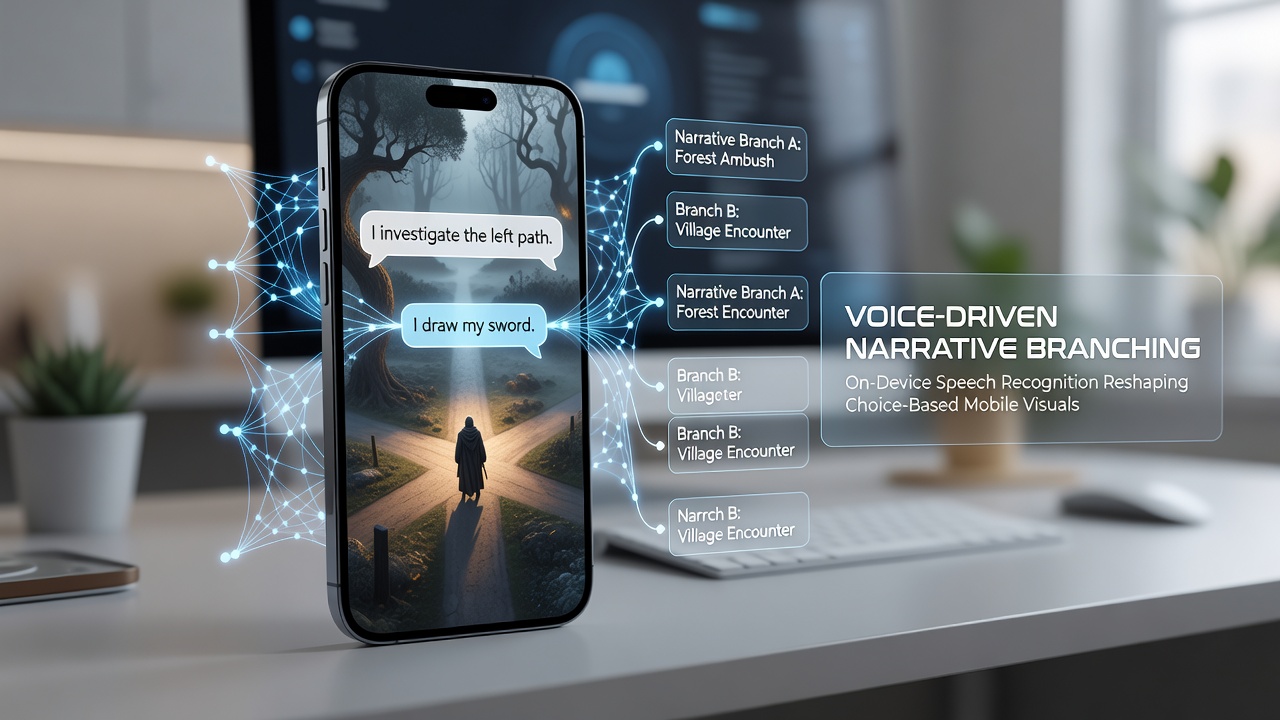
One developer documented how voice options increased replay value because different phrasings unlocked subtle variations in character reactions. Data collected from test groups showed that participants revisited chapters more frequently when spoken choices produced unique follow-up lines. Studios therefore allocate extra writing resources to cover natural language variations rather than expanding visual assets alone.
Adoption Patterns Through July 2026
By July 2026 several mid-sized studios had shipped updates that added voice branching to existing visual novel libraries, and download metrics revealed steady uptake across regions where mobile data plans remain limited. The approach suits markets with intermittent connectivity since no server calls occur during play. Industry observers note that integration costs have dropped as open-source toolkits for on-device inference matured.
Academic studies from institutions in Canada and Australia have examined player engagement metrics in similar systems, finding that voice input correlates with higher retention rates when stories emphasize conversation over action sequences. Those analyses also highlight accessibility gains for users who prefer speaking over tapping small interface elements.
Technical Constraints and Solutions
Background noise poses challenges during outdoor play so current implementations include noise suppression layers that filter common ambient sounds before intent classification begins. Storage requirements for the recognition models average under 50 megabytes which leaves room for additional story content on most handsets. Updates to the models arrive through standard app patches rather than full reinstalls.
Engineers continue refining wake-word detection so the system activates only when the player holds a specific on-screen prompt instead of listening constantly. This design choice preserves privacy further while reducing false activations that could derail narrative flow.
Future Integration With Other Mobile Features
Developers explore combining voice branching with location data and device sensors so spoken decisions can reference real-world context such as time of day or weather conditions. Early prototypes demonstrate how a character might comment on rain outside if the phone detects precipitation through its sensors. Such combinations remain experimental yet point toward richer narrative layers without increasing server dependency.
Conclusion
Voice-driven branching via on-device speech recognition continues to expand teh design space for choice-based mobile visual novels by enabling responsive dialogue while preserving privacy and performance. Adoption has accelerated through 2026 as hardware capabilities and development tools align. The approach delivers measurable improvements in replayability adn accessibility according to available metrics and research reports.