Visual Scripting Environments Expand Access to Mobile Game Creation for Non-Programmers
Written by Katja Powell · Jun 28, 2026
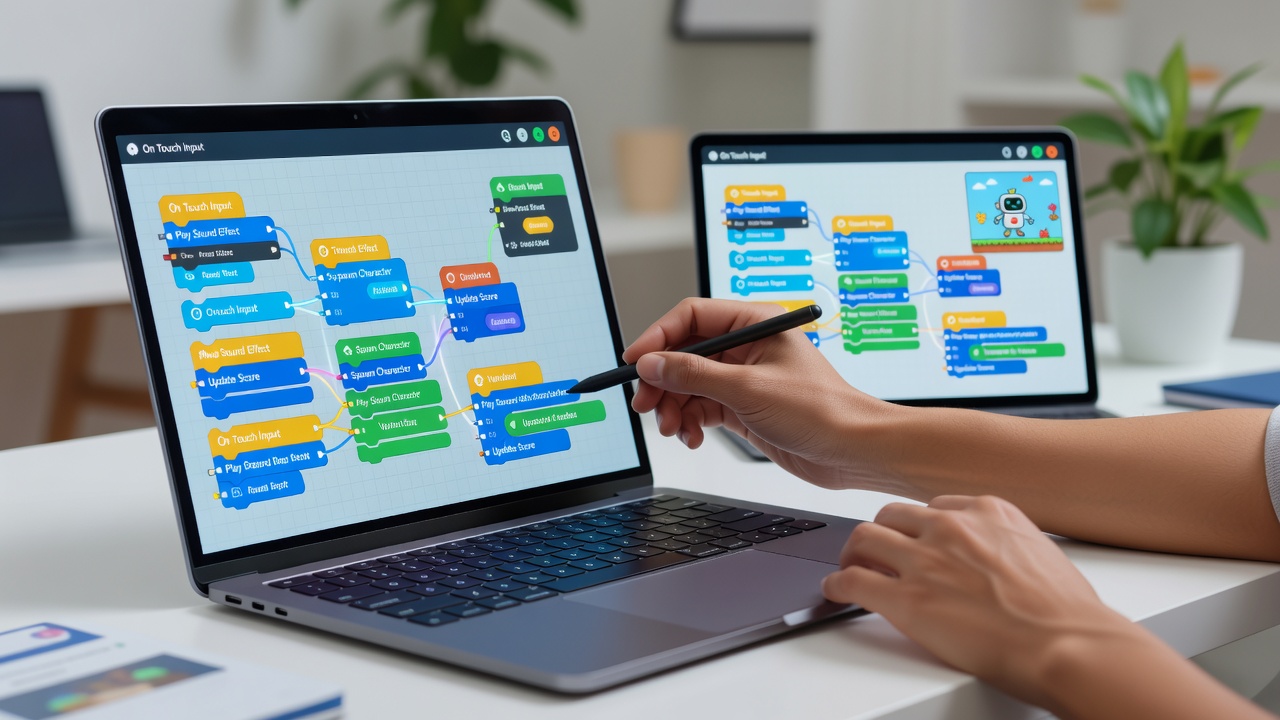
Visual Scripting Environments Expand Access to Mobile Game Creation for Non-Programmers
Visual scripting environments allow creators to assemble game mechanics through node-based interfaces rather than traditional text code, and this approach has shifted entry points for mobile game development since the mid-2010s. Developers connect predefined nodes that represent events, conditions, and actions, which eliminates the need to learn syntax while still producing functional logic for gameplay systems. Research from academic institutions shows adoption rates rising among independent teams that lack dedicated programming staff, with data indicating that visual tools now support a measurable share of new mobile titles released on major app stores.
Core Mechanics Behind Visual Scripting Tools
Nodes represent individual functions such as player input detection, physics calculations, and UI updates, while connections between those nodes define execution order and data flow. Creators drag elements onto a canvas and adjust parameters through property panels, and the underlying engine compiles these graphs into runtime instructions that run on Android and iOS devices. Studies from European research centers reveal that this method reduces initial setup time for basic prototypes from weeks to days, particularly when teams focus on 2D side-scrollers or simple puzzle formats common in mobile markets.
Event-driven graphs handle touch gestures, accelerometer readings, and network callbacks without requiring separate code files, and conditional nodes manage branching narratives or scoring systems. Observers note that debugging occurs through visual highlighting of active paths during playtests, which surfaces logic errors faster than scanning lines of script. Figures from industry reports compiled in early 2026 indicate that over 40 percent of surveyed mobile developers using these environments previously held no formal coding background.
Tool Landscape and Platform Integration
Unity Visual Scripting integrates directly with the Unity engine and supplies mobile-optimized nodes for touch input and asset loading, whereas Unreal Engine Blueprints offer similar functionality with added support for advanced rendering pipelines on higher-end devices. Godot's visual scripting system provides an open-source alternative that runs lightweight on mid-range smartphones, and specialized platforms like Buildbox target casual mobile genres with prebuilt templates for endless runners and match-three mechanics. Data from the International Game Developers Association shows these tools collectively account for a growing portion of submissions to app marketplaces, especially from creators operating outside established studios.
Cross-platform export pipelines within these environments generate both Android APK files and iOS builds from a single project file, and asset stores supply ready-made node libraries for common features such as leaderboards and in-app purchases. Researchers at Australian universities have documented how template libraries accelerate iteration cycles, allowing teams to test multiple monetization models within the same visual framework before committing to full production.
Industry Adoption Patterns Through Mid-2026
Small teams and solo creators represent the primary users, with many transitioning from art or design roles into full production workflows. Case examples include educational projects developed in classrooms where students assemble complete mobile experiences without prior scripting experience, and commercial releases that reached top charts in puzzle and simulation categories. Reports compiled by the Entertainment Software Association highlight that visual scripting reduces reliance on external contractors for logic implementation, which in turn lowers overall project budgets for titles targeting regional markets.
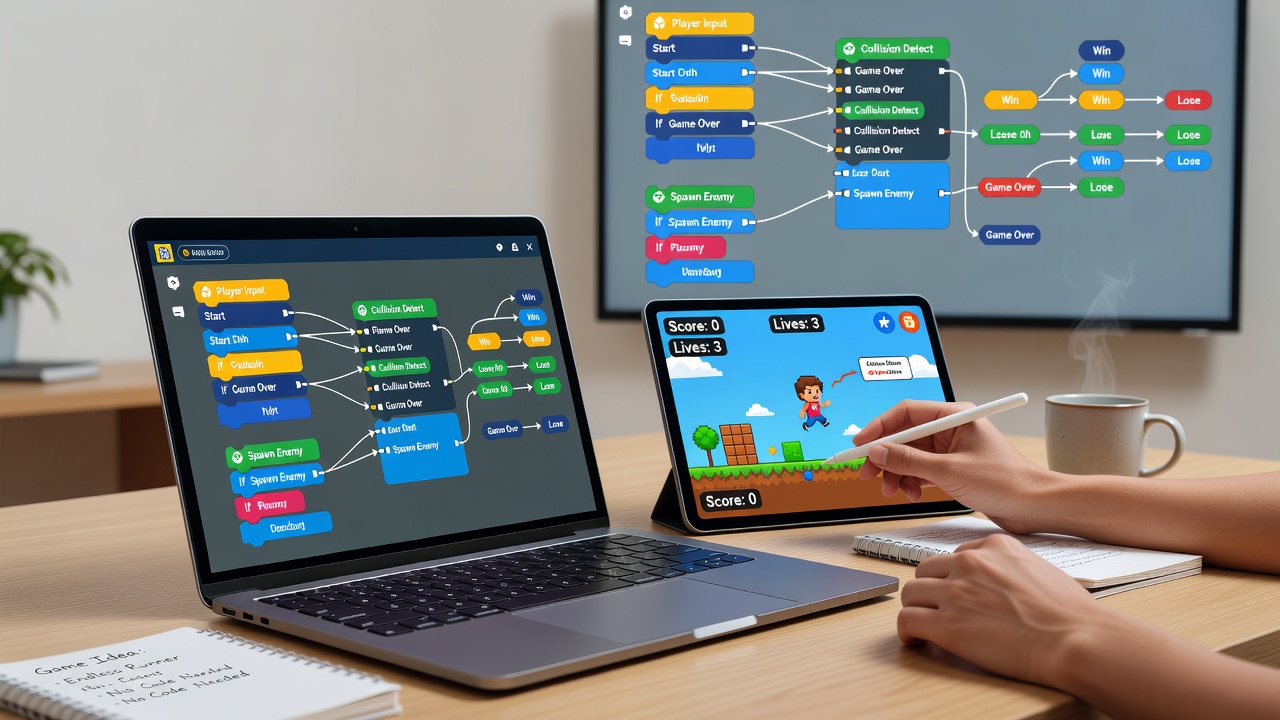
Training programs offered by tool providers include guided tutorials that progress from basic movement systems to complete level designs, and community forums supply shared graphs that users import directly into their projects. Figures released in June 2026 by a Canadian technology research group indicated sustained growth in workshop attendance focused on these environments, with participation numbers up 25 percent compared to the previous year. Integration with device-specific features such as camera access and haptic feedback occurs through dedicated node sets, which keeps projects aligned with current hardware capabilities without manual API calls.
Workflow Changes and Collaboration Benefits
Designers and artists contribute directly to gameplay systems by editing graphs alongside programmers, which shortens communication loops during feature implementation. Version control systems adapted for visual assets track changes to node arrangements and parameter values, and this supports distributed teams working across time zones. Evidence from multiple case studies shows that non-technical stakeholders participate more actively in playtest reviews when they can trace logic paths visually rather than interpreting code comments.
Performance profiling tools within the environments display real-time metrics for node execution costs, and creators optimize graphs by collapsing repetitive sections into reusable sub-graphs. Mobile-specific constraints such as memory limits and battery usage receive dedicated node warnings during compilation, which guides adjustments before builds reach testing devices. Those who've examined adoption trends note that this transparency encourages experimentation among creators who would otherwise avoid complex systems.
Conclusion
Visual scripting environments continue to reshape entry pathways into mobile game creation by translating programming concepts into graphical representations that non-programmers can manipulate directly. Tool integration with major engines and export pipelines maintains compatibility with current device ecosystems, while documented usage statistics reflect broader participation across educational and commercial contexts. As these systems evolve alongside hardware advancements, the range of contributors producing functional mobile experiences expands accordingly.