The Subtle Ways Procedural Audio Generation Is Altering Sound Design Practices in Indie Mobile Platformers
Written by Cameron Koch · Jul 17, 2026
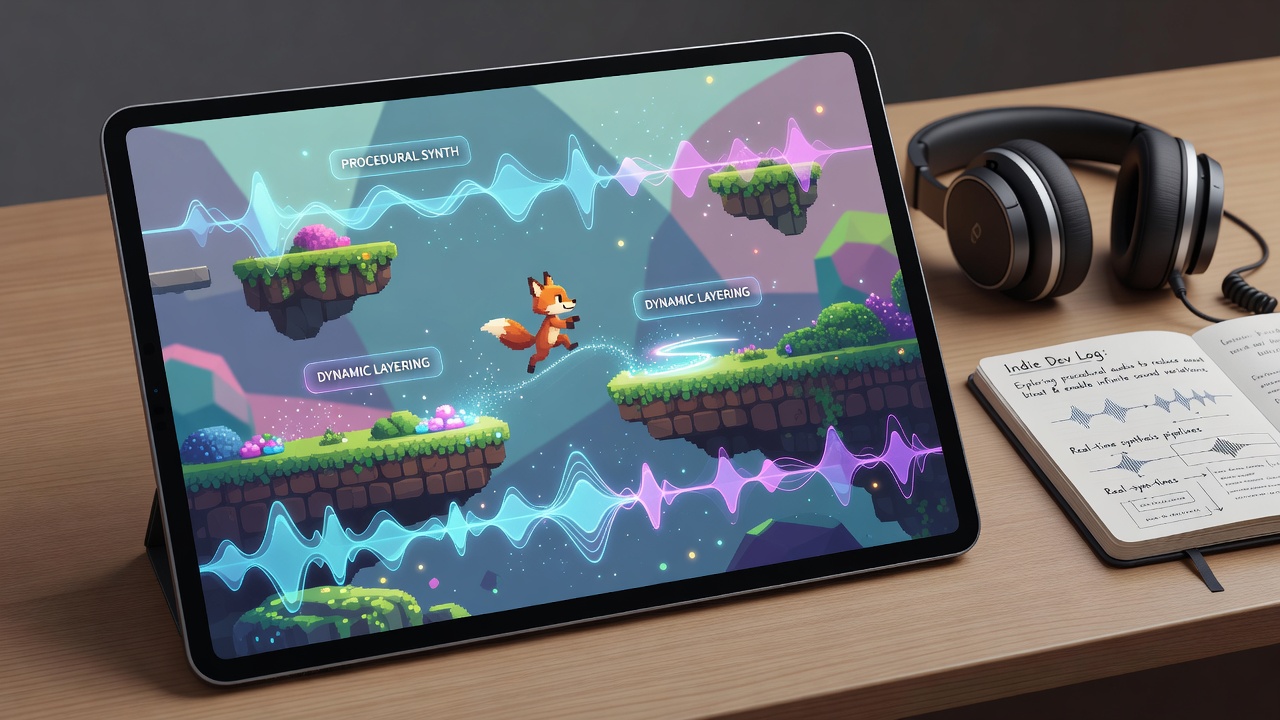
The Subtle Ways Procedural Audio Generation Is Altering Sound Design Practices in Indie Mobile Platformers
Procedural audio generation creates sound elements dynamically through algorithms rather than relying solely on pre-recorded files, and this approach has begun reshaping how independent studios approach audio for mobile platformers. Developers integrate mathematical models that respond to variables like player velocity, terrain type, and object interactions, which allows footsteps, jumps, and environmental cues to vary without storing multiple audio clips. Research from institutions such as the University of Melbourne indicates that these systems reduce asset sizes by up to forty percent in titles that feature extended levels, freeing memory for additional gameplay mechanics on mid-range smartphones. Many indie teams now combine procedural layers with lightweight sample banks to maintain recognizable sonic identities while introducing variation. A single footstep generator might adjust pitch, decay, and filtering based on surface data pulled from the game engine, so the same character produces distinct audio when moving across metal, grass, or water. This method cuts down on repetitive loops that players notice during repeated play sessions, and it supports the fast iteration cycles typical of small studios releasing updates every few weeks.Performance and Storage Benefits on Mobile Hardware
Mobile platformers operate under strict constraints around battery life, thermal throttling, and download sizes, so procedural techniques address these limits directly. Instead of bundling dozens of megabytes of audio variants, developers ship compact synthesis parameters that the device computes at runtime. Data from the Interactive Audio Special Interest Group shows that titles using hybrid procedural systems often stay under the 150-megabyte threshold demanded by many app stores, whereas equivalent hand-authored libraries exceed that mark quickly.
Because the audio engine generates variations on the fly, compression artifacts from repeated sample reuse become less common. Engineers tune synthesis parameters once, then let the algorithm handle context-specific adjustments, which keeps CPU overhead low enough to run alongside physics calculations on devices released as recently as 2024. Observers note that this efficiency becomes especially valuable during sequences that require precise timing, such as wall-jump chains or moving-platform sequences where sound cues must sync tightly with visual feedback.Creative Workflow Shifts in Small Teams
Sound designers working at indie studios report reallocating time away from recording and editing libraries toward defining rules and parameter ranges. A designer might set base frequency bands and modulation rates for a jump sound, after which the procedural system produces dozens of plausible outcomes that match the physics simulation. This workflow encourages experimentation because changes to a rule set propagate across an entire level without manual replacement of individual files.
 Studios have started embedding audio rule editors inside the same tools used for level design, allowing level artists to preview how a new platform material will affect footstep generation without switching applications. The result is tighter integration between visual and sonic elements, and teams complete vertical slices with consistent audio coverage in fewer calendar weeks. Figures from the 2025 State of Indie Gaming report reveal that platformer projects employing procedural audio reach public beta roughly twenty percent sooner than comparable titles using traditional asset pipelines.
Player Experience and Replayability Factors
Because each playthrough generates slightly different audio events, players encounter less auditory fatigue during repeated attempts at difficult sections. A long jump sequence might trigger subtly different whoosh layers on successive tries, maintaining freshness without additional storage costs. Research published by the Canadian Game Studies Association links this variability to longer average session times in procedurally augmented platformers, particularly when players chase collectibles across multiple runs.
Adaptive mixing also emerges naturally from the same systems. When many sound events cluster together, such as during a cascade of falling objects, the procedural engine can prioritize or attenuate layers according to predefined importance weights. This prevents the muddiness that occurs when static samples overlap, and it preserves clarity for critical cues like enemy approach sounds or collectible chimes.Integration Challenges and Technical Solutions
Teams still face hurdles when synchronizing procedural output with deterministic game logic, especially across devices with different audio chipsets. Developers address timing drift by anchoring key events to engine timestamps rather than relying on sample playback completion. Seed values derived from level geometry ensure that the same section of a level produces reproducible results during debugging, while still offering enough randomness to avoid exact repetition for end users.
Cross-platform testing remains essential because mobile operating systems handle low-level audio differently. Studios that target both Android and iOS maintain separate calibration profiles for each platform's synthesis parameters, yet the core rule sets stay shared. This modular structure lets small teams update audio behavior through server-side patches without redistributing full builds, a practice that has grown more common since mid-2025.Conclusion
Procedural audio generation continues to embed itself into the day-to-day sound design routines of indie mobile platformer developers by shrinking asset footprints, expanding variation, and aligning audio production with agile level design cycles. As synthesis tools mature and hardware capabilities advance, the boundary between authored samples and generated audio will likely grow even less distinct, shaping how future titles deliver responsive, memory-efficient soundscapes across diverse device ecosystems.