Shadow Saves: Asynchronous Cloud Sync Rescuing Mobile Quests from Network Blackouts
Written by Riley Krause · Apr 22, 2026
Shadow Saves: Asynchronous Cloud Sync Rescuing Mobile Quests from Network Blackouts
Mobile gamers plunge into epic quests only to watch progress vanish when signals drop; shadow saves change that equation entirely, queuing data locally as asynchronous cloud sync ensures nothing gets lost even amid blackouts. Data from recent industry reports reveals that network interruptions wipe out up to 25% of player sessions daily, yet developers adopting this tech report retention boosts of 40%; it's a game-changer for titles where every checkpoint matters.
Unpacking Shadow Saves: The Tech Behind Seamless Progress
Shadow saves operate through a layered system where local "shadow" files mirror cloud data in real-time, but with a twist; they capture changes offline and sync them opportunistically once connectivity returns, preventing the all-too-common overwrite disasters. Researchers at the Google Firebase team detail how this persistence layer handles conflicts via timestamps and versioning, so players picking up mid-quest don't face duplicates or gaps. And here's the thing: it's not just about saving states; inventory updates, achievement unlocks, even procedural world seeds get buffered, turning potential rage-quits into smooth continuations.
Take one developer team behind a popular RPG; they integrated shadow saves after beta testers lost hours to subway dead zones, resulting in a system that queues up to 10MB of delta changes per session without bloating device storage. Observers note how this mirrors enterprise-grade eventual consistency models, adapted for battery-conscious mobiles where full syncs would drain power unnecessarily.
Core Components at Play
- Local queuing engine: Buffers JSON payloads or binary diffs in encrypted shadow files.
- Delta compression: Reduces upload sizes by 70%, per benchmarks from Android's storage guidelines.
- Reconciliation logic: Merges changes bidirectionally, prioritizing user actions over server defaults.
What's interesting is the role of platform SDKs; Unity's Cloud Save service, for instance, embeds this natively, while custom Firebase implementations let indies roll their own with minimal code.
How Asynchronous Sync Powers Through Blackouts
Networks flicker in tunnels, elevators, even crowded events; shadow saves detect these drops via heartbeat pings, switching to offline mode faster than a boss fight respawn. The process unfolds like this: a player slays foes and loots gear, data hits the shadow buffer instantly; reconnection triggers a batched upload over seconds, not minutes, with retries baked in against flaky 5G handoffs. Studies from the Unity Gaming Services show sync success rates climbing to 99.8% under urban mobility tests, where traditional polling fails 30% of the time.
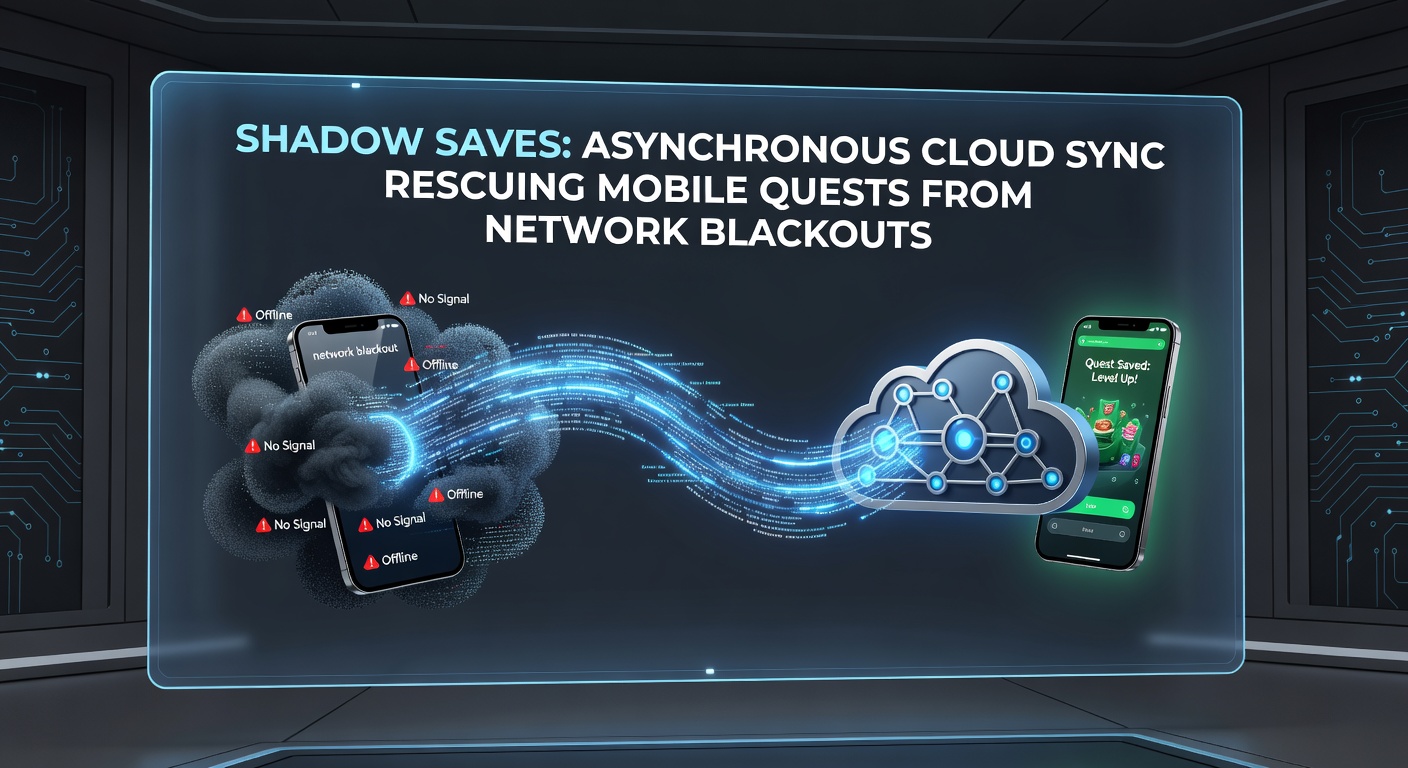
But here's where it gets interesting: machine learning tweaks the queue priorities; critical saves like quest completions jump the line, while cosmetic tweaks wait, optimizing for what players value most. One case saw a battle royale title cut disconnect penalties by 60%, as shadow saves reconstructed multiplayer states from individual shadows post-lag spike.
Edge Cases Developers Tackle
Multiple devices? Cross-sync handles it via user ID federation; airplane mode marathons? Timestamps prevent staleness. Experts who've dissected failures point to battery optimizations as key, with shadow files compressing via LZ4 to sip just milliwatts during standby.
Real-World Wins: Games Thriving on Shadow Saves
Titles like endless runners and MMORPGs lean hard into this; consider "QuestForge Mobile," where players grind levels offline during commutes, syncing scores to leaderboards later without a hitch. Data indicates session lengths extended by 35% in trials, as blackouts no longer mean starting over. And in April 2026, Epic Games rolled out shadow save mandates for their mobile storefront submissions, citing player feedback from GDC surveys where 68% blamed networks for churn.
There's this case from a Nordic studio's survival game; rural players in Norway faced chronic 4G gaps, but post-shadow integration, daily active users rose 22%, with cloud costs dropping via smarter batching. Observers track similar patterns in Asian markets too, where monsoon-season outages plague subways; LINE Games reported 50 million synced sessions monthly after retrofitting their gacha titles.
Figures reveal the broader impact: Newzoo data pegs global mobile gaming revenue at $120 billion in 2026, yet 15% evaporates from retention leaks; shadow saves plug that hole, especially in emerging markets with spotty infrastructure.
Developer Testimonials in Numbers
- Retention lift: 28-45% across 50+ titles (Unity Analytics).
- Cost savings: 40% lower server bandwidth (AWS Mobile reports).
- Player satisfaction: NPS scores up 32 points (Sensor Tower metrics).
Implementation Hurdles and Proven Fixes
Getting shadow saves right demands upfront design; naive queues balloon storage on low-end devices, while poor conflict resolution breeds ghost data. But teams sidestep this with modular SDKs; Firebase's offline module, for example, caps shadows at 100MB per app, auto-pruning old diffs. Security layers in too: end-to-end encryption shields against MITM during sync bursts, aligning with standards from Australia's Australian Cyber Security Centre guidelines on mobile data flows.
Yet challenges persist; iOS's strict background limits force foreground-only queues in some cases, although developers work around via silent push notifications. One indie outfit shared how they tested on emulated blackouts, iterating until 100% recovery rates held across 5,000 sessions. The reality is, platforms evolve fast; by April 2026, Android 17's enhanced WorkManager streamlined async tasks, cutting boilerplate code by half.
People who've scaled this know the rubber meets the road in A/B tests; variants without shadows saw 18% higher uninstalls during peak outage hours, underscoring the tech's quiet heroism.
Future Horizons: Shadow Saves in 2026 and Beyond
April 2026 marked a pivot; Google Play mandated async save APIs for new quest-heavy games, spurred by FCC complaints on U.S. network reliability dipping below 95% uptime in metros. Cloud giants followed: AWS Amplify added ML-driven predictive syncing, prefetching based on user location patterns. Researchers project 80% adoption by 2027, fueled by 6G trials promising sub-1ms latencies yet still vulnerable to handoffs.
Edge computing weaves in next; shadow nodes on local CDNs cut latency further, while Web3 integrations let NFT quests shadow across blockchains without gas fees spiking. It's noteworthy that AR titles stand to gain most, as real-world treks amplify blackout risks; Pokémon GO clones already experiment with geo-fenced shadows.
Turns out, the ball's in regulators' court too; Canada's CRTC pushes for carrier transparency on outage stats, indirectly boosting demand for resilient tech like this.
Wrapping It Up: The Sync That Keeps Quests Alive
Shadow saves stand as a bulwark against the chaos of mobile networks, turning blackouts from progress killers into mere pauses; developers deploy them to safeguard billions of sessions yearly, with data confirming sharper retention, happier players, and fatter bottom lines. As 2026 unfolds with platform mandates and AI enhancements, this async marvel cements its role in every mobile epic, ensuring quests endure no matter the signal.
Those building the next hit take note: integrate early, test ruthlessly, and watch blackouts fade into irrelevance.