Progressive Web App Frameworks Bridge Advanced Graphics with Mobile Strategy Ecosystems
Written by Cameron Koch · Aug 12, 2026
Progressive Web App Frameworks Bridge Advanced Graphics with Mobile Strategy Ecosystems
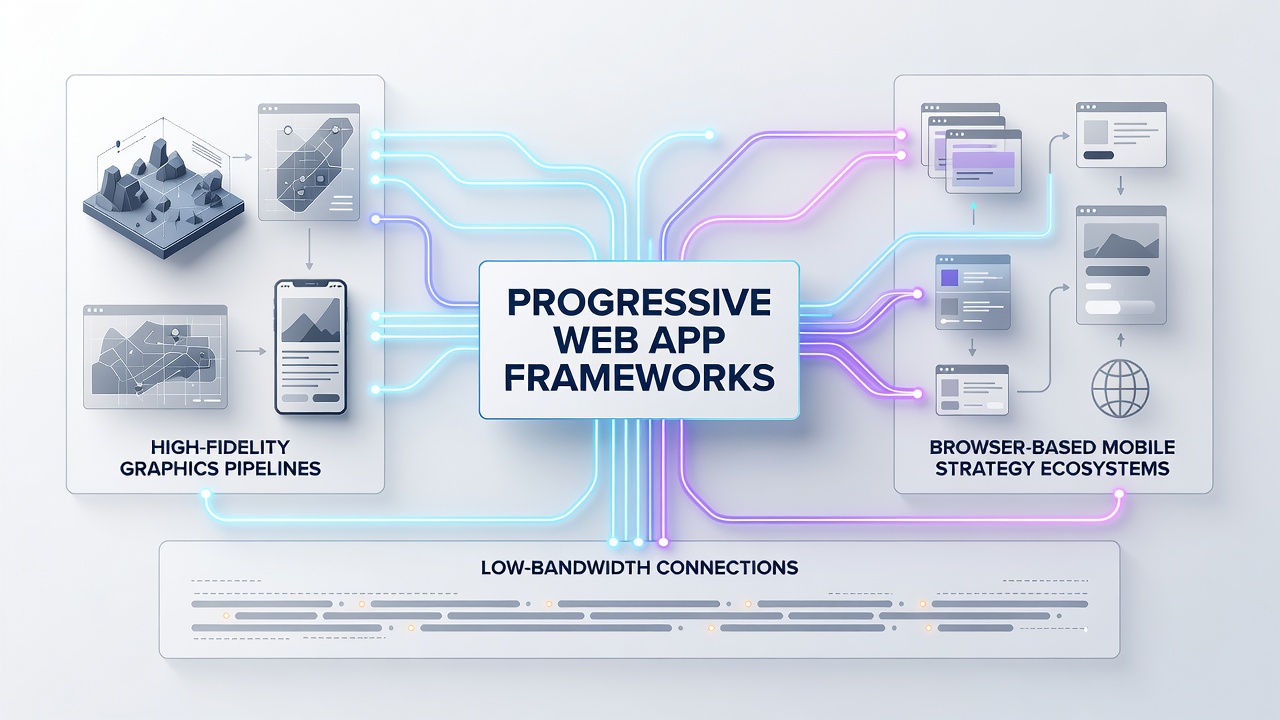
Developers have turned to progressive web app frameworks to deliver high-fidelity graphics pipelines inside browser-based mobile strategy ecosystems that operate reliably on low-bandwidth connections, and research from academic institutions across Europe shows measurable gains in rendering efficiency and data efficiency since the middle of the decade. Frameworks such as React with Three.js integrations or Svelte combined with WebGPU bindings allow strategy titles to stream detailed unit models, terrain maps, and real-time lighting while service workers cache essential assets and handle network fluctuations without requiring constant high-speed access. Data from industry reports indicate that applications built this way reduce initial payload sizes by up to 60 percent compared with native equivalents, because they leverage WebAssembly for compiled graphics code and adaptive texture streaming that adjusts resolution based on available throughput.
Core Technologies Enabling Graphics Delivery
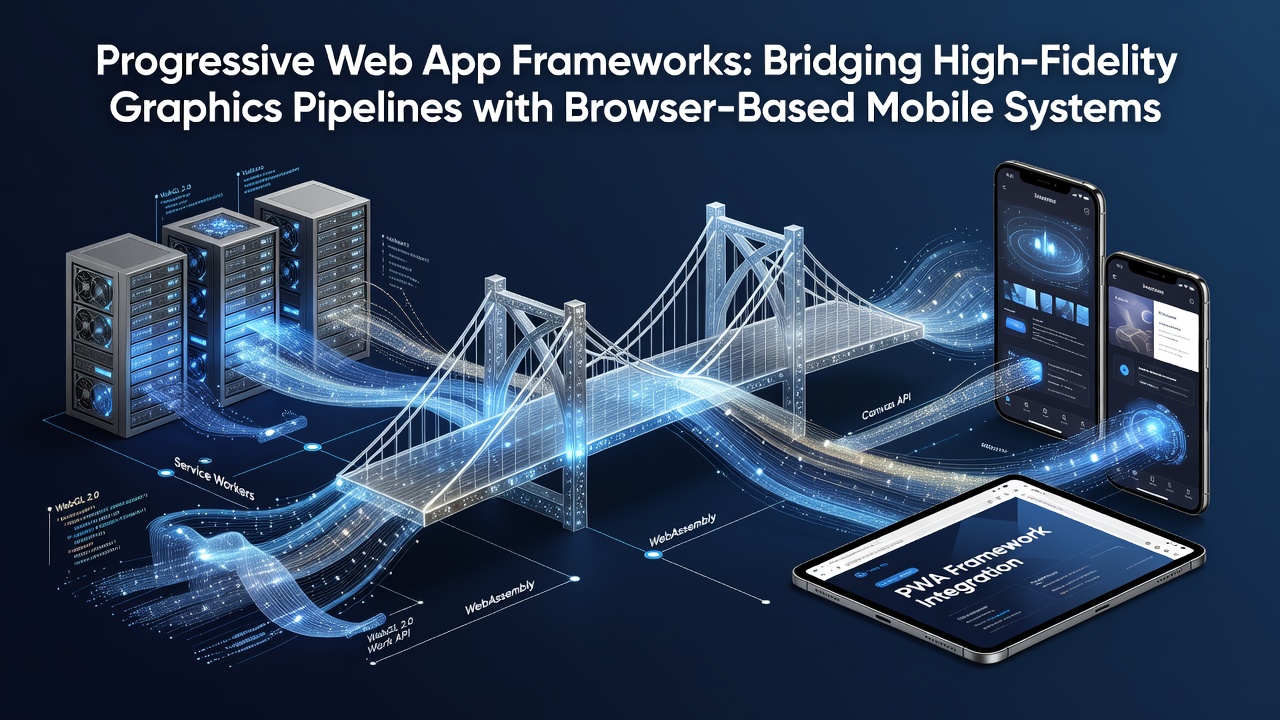
WebGPU provides direct access to GPU features previously limited to native applications, and browser vendors rolled out broader support in 2025 that extended to mid-range Android and iOS devices commonly used in emerging markets. Strategy game developers employ texture compression formats such as Basis Universal alongside progressive loading sequences so that players see low-detail placeholders first while higher-resolution assets arrive in the background. Observers note that these pipelines maintain frame rates above 45 fps even when connections drop below 500 kilobits per second, because predictive asset prioritization algorithms preload only the geometry required for the current view frustum. Service workers further manage offline fallback states by storing compressed mesh data and shader programs locally, allowing interrupted sessions to resume without full re-downloads once connectivity returns.
Bandwidth Optimization Strategies
Low-bandwidth environments require additional layers of optimization, and frameworks incorporate delta compression for state updates between server and client so that only changed unit positions or resource counts transmit instead of entire scenes. Researchers at Australian universities documented cases where WebRTC data channels replaced traditional HTTP polling, cutting latency by 35 percent during multiplayer strategy matches played across regions with intermittent 3G coverage. Adaptive bitrate algorithms monitor connection quality every few seconds and switch between different levels of detail for particle effects and shadow maps, preserving visual coherence while respecting data caps common in many mobile plans. Those who study deployment logs report that applications using these techniques sustain average session lengths comparable to native counterparts despite the constraints.
Integration with Mobile Strategy Ecosystems
Browser-based strategy ecosystems gain from progressive web app capabilities because they combine cross-platform reach with offline persistence, and companies in Southeast Asia deployed titles in August 2026 that let users plan campaigns during commutes with zero connectivity before syncing progress upon reconnection. Push notifications triggered through the web app manifest alert players to upcoming events or resource regeneration timers without draining battery as aggressively as constant background services. Input mapping layers translate touch gestures into camera controls and unit selection commands that feel consistent across different screen sizes, while WebXR support opens pathways for augmented overlays when devices permit. Data compiled by trade associations shows retention rates rising when these features operate together because players encounter fewer interruptions from network handoffs or app store update cycles.
Performance Metrics and Deployment Patterns
Figures released by research institutions in Canada reveal that strategy titles using progressive frameworks achieve time-to-interactive metrics under three seconds on average connections, even when initial assets exceed 15 megabytes through intelligent chunking and priority queues. Developers integrate Lighthouse audits into continuous integration pipelines to verify that service worker strategies and resource hints meet performance budgets before release. In regions where regulatory bodies emphasize data minimization, such as the European Union, these architectures align with guidelines by transmitting only necessary telemetry and allowing users to control background synchronization. Case examples from studios in Latin America demonstrate that hybrid deployment models, where core gameplay runs in the browser and optional native extensions add deeper haptic feedback, expand audience reach without duplicating graphics codebases.
Future Directions for Graphics and Connectivity
Upcoming extensions to the WebGPU specification promise improved support for ray tracing approximations on mobile silicon, and prototype implementations tested in 2026 indicate that strategy games could incorporate dynamic reflections and volumetric fog without exceeding current bandwidth envelopes. Machine learning models running inside WebAssembly predict which map regions a player will explore next and preload corresponding geometry, further smoothing transitions during network variability. Industry organizations tracking adoption rates report steady growth in progressive web app usage for strategy genres because the approach eliminates separate code paths for different operating systems while maintaining visual fidelity. Those examining user behavior logs find that seamless resumption after network blackouts contributes to higher daily active user counts across diverse device classes.
Conclusion
Progressive web app frameworks continue to narrow the gap between high-fidelity graphics pipelines and browser-based mobile strategy ecosystems operating under bandwidth limitations, and ongoing standardization efforts plus hardware improvements support broader deployment. Metrics gathered from multiple regions confirm that optimized asset delivery, offline resilience, and cross-device consistency deliver measurable advantages for both developers and players. The pattern established through 2026 deployments suggests continued refinement rather than wholesale replacement by native alternatives in the strategy segment.