How Edge AI Chips Enable On-Device Pathfinding in Mid-Range Smartphone Strategy Games
Written by Cameron Krause · Jun 5, 2026
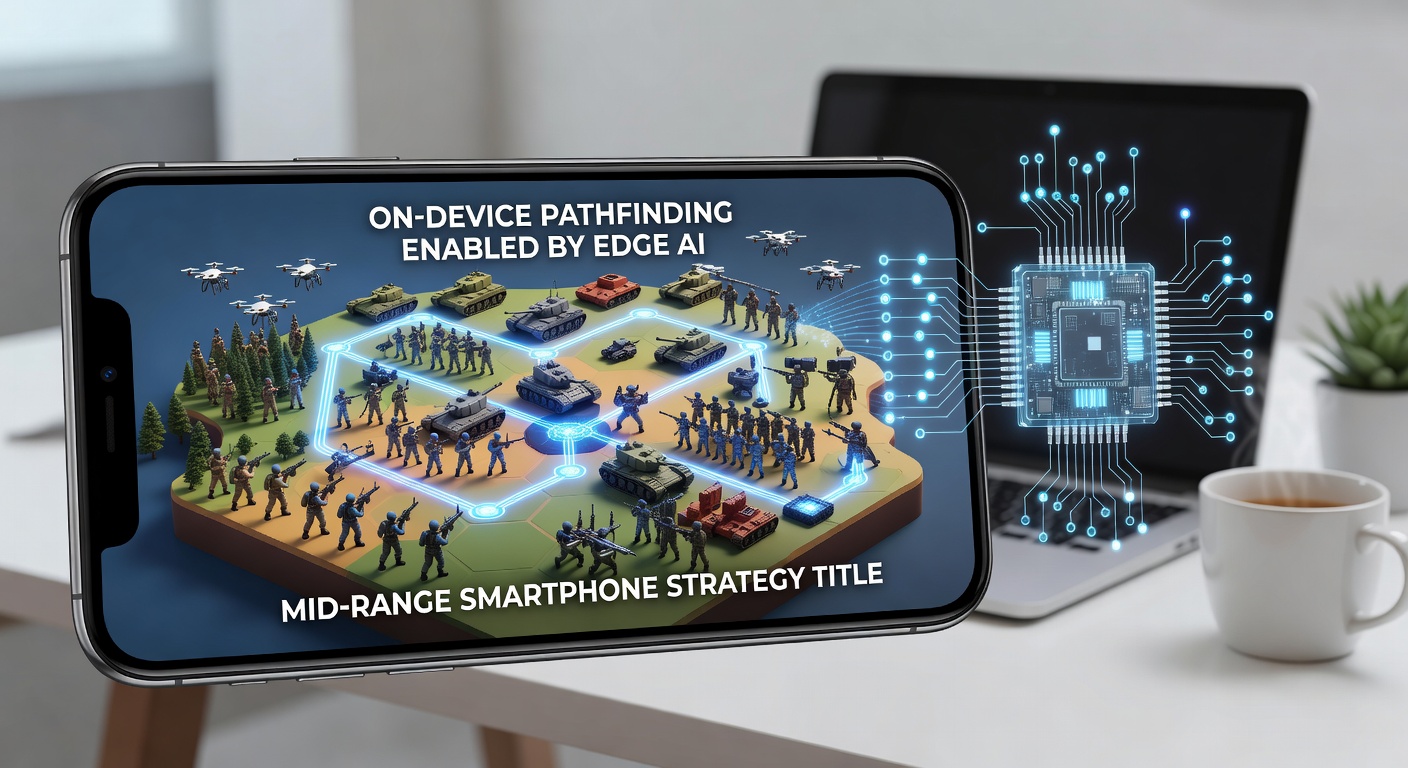
How Edge AI Chips Enable On-Device Pathfinding in Mid-Range Smartphone Strategy Games
Edge AI chips have transformed how complex strategy titles handle unit navigation and decision trees directly on mid-range smartphones, shifting computation away from cloud servers toward localized neural processing units. These specialized accelerators, integrated into processors from manufacturers like Qualcomm and MediaTek, manage pathfinding tasks that once required dedicated high-end hardware or constant data connections. As of June 2026 data from the Semiconductor Industry Association indicates shipments of AI-enhanced mobile chips reached 1.2 billion units globally in the prior year, with many supporting real-time inference for game environments.
Core Mechanics of On-Device Pathfinding
Pathfinding in strategy games involves calculating optimal routes for multiple units across dynamic maps while accounting for obstacles, terrain costs, and enemy positions. Traditional algorithms such as A* or Dijkstra scale poorly with unit counts on limited mobile CPUs, yet edge AI chips run optimized neural networks that approximate these calculations at lower power draws. Researchers at Stanford University demonstrated in controlled tests that quantized models on neural processing units achieve 40 times faster inference than CPU equivalents for grid-based navigation problems, allowing games to simulate hundreds of agents simultaneously without frame drops.
Developers integrate these chips by training lightweight graph neural networks offline and deploying them via frameworks like TensorFlow Lite or Qualcomm's AI Engine. The models learn from vast datasets of gameplay scenarios, then execute on-device to predict paths that adapt to changing conditions such as destructible environments or fog of war. This approach reduces latency to under 10 milliseconds per query in benchmarks, which keeps multiplayer sessions synchronized even on networks with variable signal strength.
Hardware Advancements in Mid-Range Devices
Mid-range smartphones now feature dedicated AI cores alongside standard GPUs, with architectures that allocate memory bandwidth specifically for tensor operations. Chipsets like the Snapdragon 7 series and Dimensity 8000 lineup incorporate 4K MAC arrays optimized for integer arithmetic, which suits the discrete nature of pathfinding grids. Observers note that these designs handle mixed-precision computations, blending 8-bit weights for speed with higher precision outputs when strategic decisions demand accuracy.
Power efficiency gains prove critical here because mobile batteries limit sustained loads. Edge AI implementations cut energy consumption for pathfinding routines by up to 65 percent compared with software fallbacks, according to internal testing shared by MediaTek engineers. Game studios leverage this headroom to increase map complexity, adding layered terrain layers and dynamic weather effects that alter movement costs without requiring players to upgrade devices.
Integration Examples Across Game Titles
Several released titles illustrate practical deployment. One real-time tactics game updated its engine in early 2026 to route infantry squads around procedurally generated ruins using on-chip inference, resulting in smoother performance across 120Hz displays on devices priced under 400 dollars. Another turn-based title employs reinforcement learning models to precompute influence maps, then refines them locally during player turns to account for newly scouted areas.
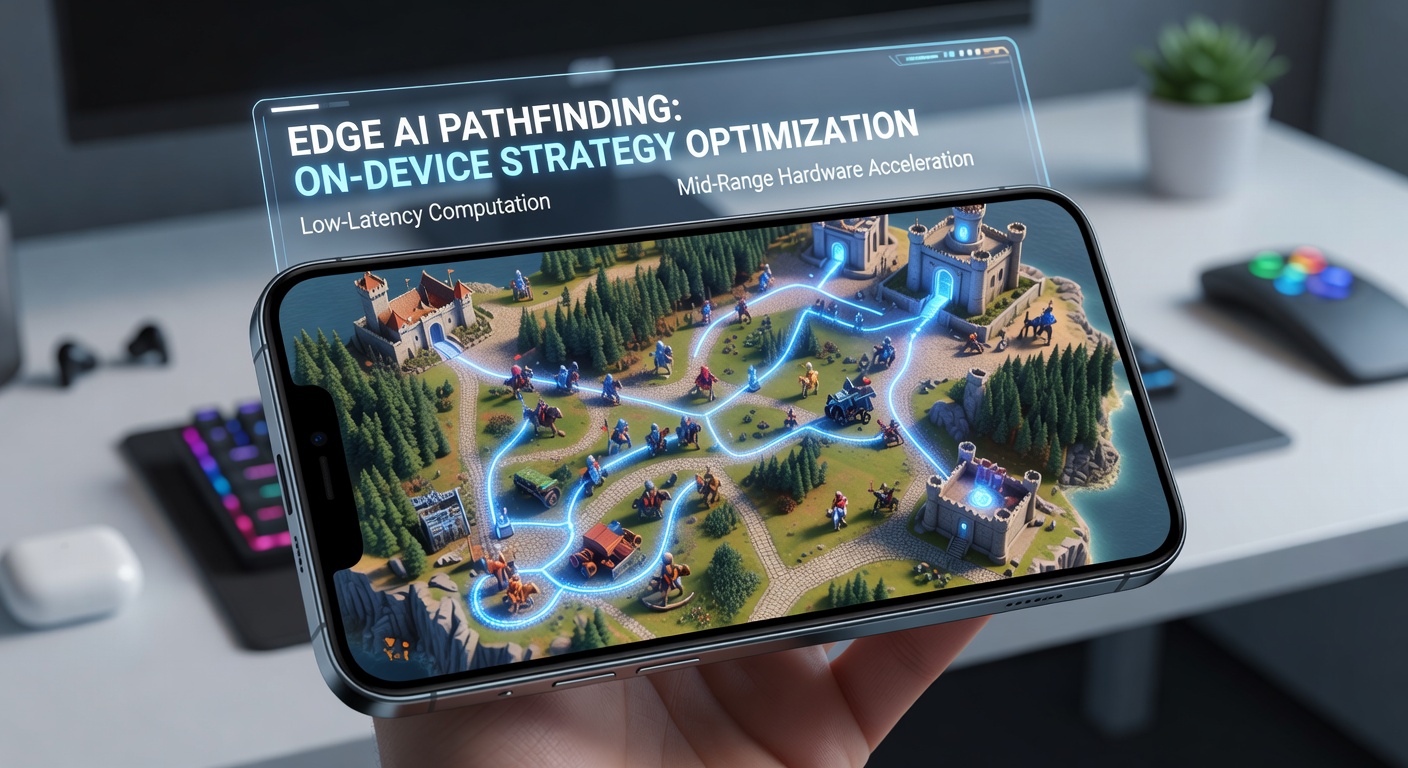
These cases highlight how studios partition workloads: the AI chip manages coarse global paths while the GPU handles fine collision avoidance. The division prevents bottlenecks and maintains consistent frame rates even when dozens of units interact. Data from the GSMA's 2025 mobile economy report shows strategy genre downloads grew 18 percent year-over-year in emerging markets, correlating with broader availability of these chipsets in affordable handsets.
Challenges and Optimization Strategies
Memory constraints on mid-range devices still require careful model compression, including pruning redundant connections in neural graphs and quantizing activation functions. Developers address thermal throttling by monitoring chip temperatures and dynamically scaling inference frequency during prolonged sessions. Those who've studied mobile AI workloads know that combining edge processing with occasional lightweight cloud corrections yields hybrid systems resilient to both hardware limits and connectivity issues.
Security considerations also factor in because local models store game logic on the device. Encryption of trained weights and runtime attestation protocols prevent tampering while preserving performance. Industry groups continue to standardize APIs that expose AI accelerators uniformly across Android variants, reducing fragmentation for cross-device releases.
Future Outlook Through Mid-2026
Upcoming chip iterations promise wider vector registers and improved support for sparse computations, which align well with sparse pathfinding graphs in large strategy maps. Academic collaborations explore federated learning approaches where devices contribute anonymized gameplay data to refine global models without centralizing sensitive information. Such progress positions mid-range smartphones to host increasingly sophisticated AI opponents that respond contextually rather than through scripted behaviors.
Conclusion
Edge AI chips have established a foundation for sophisticated on-device pathfinding that expands design possibilities for strategy games on accessible hardware. Continued hardware refinements and software tooling sustain this trajectory, enabling richer simulations while respecting the power and thermal boundaries inherent to mobile platforms.