How Community Forums Drive Iterative Design Changes in Casual Entertainment Software
Written by Cameron Krause · Jul 19, 2026
How Community Forums Drive Iterative Design Changes in Casual Entertainment Software
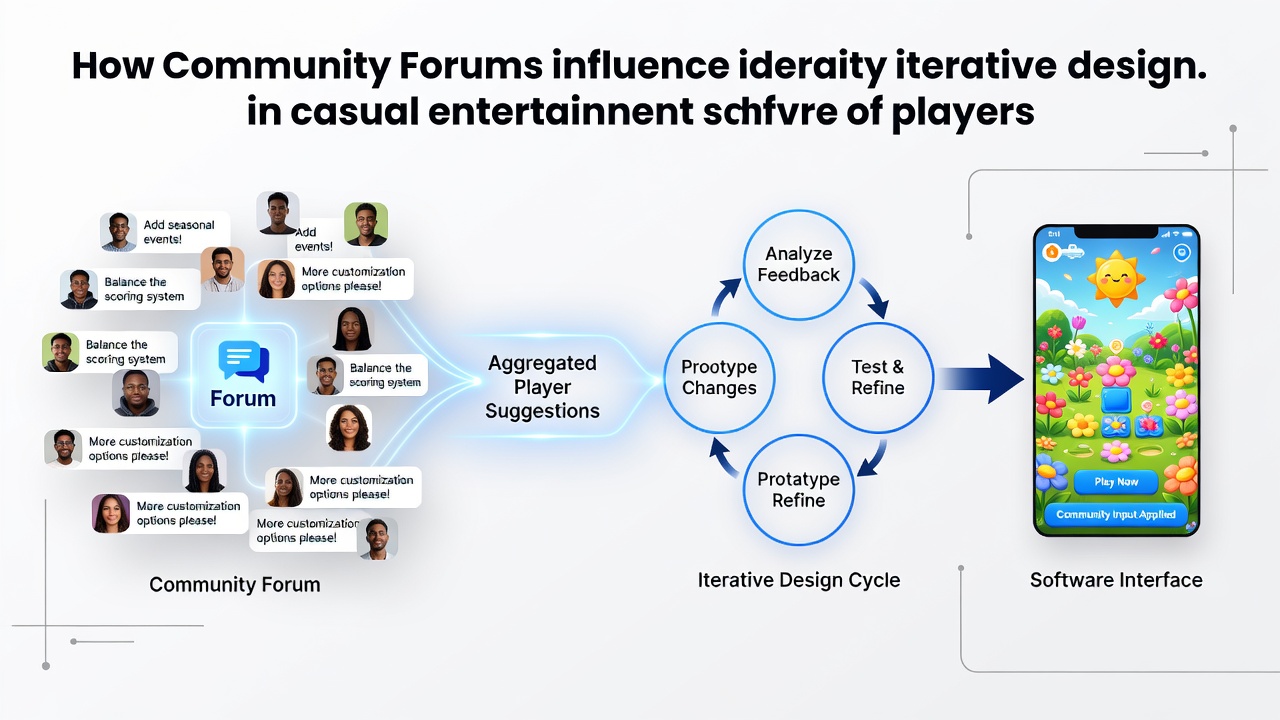
Community forums have become central hubs where players exchange ideas about casual entertainment software, and developers often monitor these spaces to gather aggregated suggestions that inform iterative design updates. Data from multiple industry reports shows that forums such as official game boards and moderated discussion sites collect thousands of posts monthly, with patterns emerging around mechanics like level progression, resource balancing, and user interface adjustments. Researchers at academic institutions have tracked how these collective inputs translate into code revisions, patch releases, and feature additions across puzzle, simulation, and match-three titles that dominate the casual segment. The aggregation process typically begins when forum moderators or developer teams categorize threads by theme, then apply voting systems or sentiment analysis tools to identify recurring themes. Studies from European research centers indicate that popular suggestions receive priority when they appear in at least 15 percent of active threads within a given quarter. This method allows teams to filter noise while retaining high-impact ideas, such as requests for adjustable difficulty sliders or expanded customization options that address player retention metrics.Mechanisms of Suggestion Collection and Analysis
Forum platforms integrate polling features and dedicated feedback channels that enable structured input from participants across regions. According to figures released by the Interactive Games and Entertainment Association of Australia, casual software projects that incorporated forum-derived changes recorded average session length increases of 22 percent in follow-up updates. Developers employ keyword clustering algorithms alongside manual review to surface ideas about visual updates, audio refinements, and new content modes before scheduling them into development sprints.
One documented workflow involves weekly summaries shared back to the community, which maintains engagement while validating that suggestions receive consideration. Data indicates that transparent reporting reduces duplicate posts and focuses discussion on unresolved issues. External analytics platforms further assist by scraping public threads, though privacy-compliant methods remain essential to comply with regional data regulations.
Case Examples of Implemented Changes
In July 2026 several casual simulation titles rolled out updates that originated from forum threads dating back six months earlier. Aggregated requests for seasonal event integration prompted developers to add rotating reward structures, and telemetry data later confirmed higher daily active user counts following deployment. Another project adjusted its energy regeneration system after repeated posts highlighted frustration with wait timers, resulting in revised pacing that aligned more closely with observed play patterns.
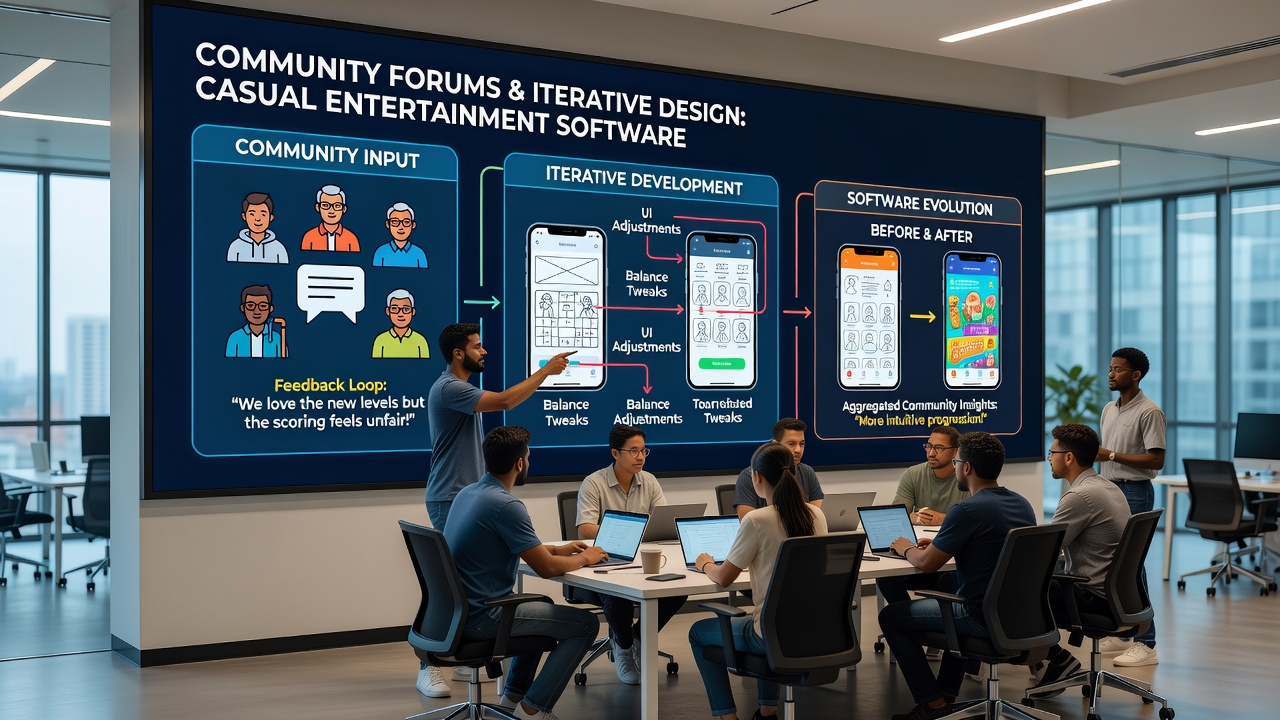
Observers note that smaller studios often rely more heavily on forum aggregation because they lack extensive internal playtesting resources. Larger publishers meanwhile combine forum signals with A/B testing frameworks to validate changes before full rollout. Research published by Canadian university labs demonstrates that titles employing this hybrid approach experience fewer post-launch hotfixes, as community consensus surfaces edge cases early.
Impact on Retention and Development Cycles
Longitudinal data collected across multiple casual entertainment platforms reveals correlations between forum-driven iterations and improved player retention curves. When aggregated suggestions lead to visible updates within two release cycles, churn rates tend to decline according to industry benchmarks. This outcome stems from players perceiving that their input influences product direction, which strengthens community loyalty without requiring additional marketing spend.
Development timelines compress when teams maintain active forum presence, since early signals replace portions of traditional focus group research. Government reports from the United States highlight how such practices align with broader software industry standards for user-centered design, particularly in entertainment categories where rapid iteration supports ongoing revenue models through in-app purchases and subscriptions.
Challenges in Processing Forum Input
Volume management remains a persistent issue, as high-traffic forums generate overlapping or contradictory suggestions that require prioritization frameworks. Conflicting requests for simpler versus more complex mechanics often emerge within the same thread clusters, prompting developers to implement optional toggles rather than wholesale revisions. Technical constraints such as platform certification requirements can also delay adoption of certain forum-backed features until compatibility testing concludes.
Conclusion
Community forums continue to serve as structured channels that convert dispersed player observations into actionable design modifications for casual entertainment software. Aggregated suggestions guide everything from minor balance tweaks to larger content expansions, supported by analytical tools and transparent communication loops. As development practices evolve, these platforms maintain their role in shaping iterative cycles that respond directly to documented user patterns across global audiences.