Haptic Harmony: Layered Vibration Layers Mimicking Real-World Textures in Mobile Racing Sims
Written by Riley Krause · Apr 26, 2026
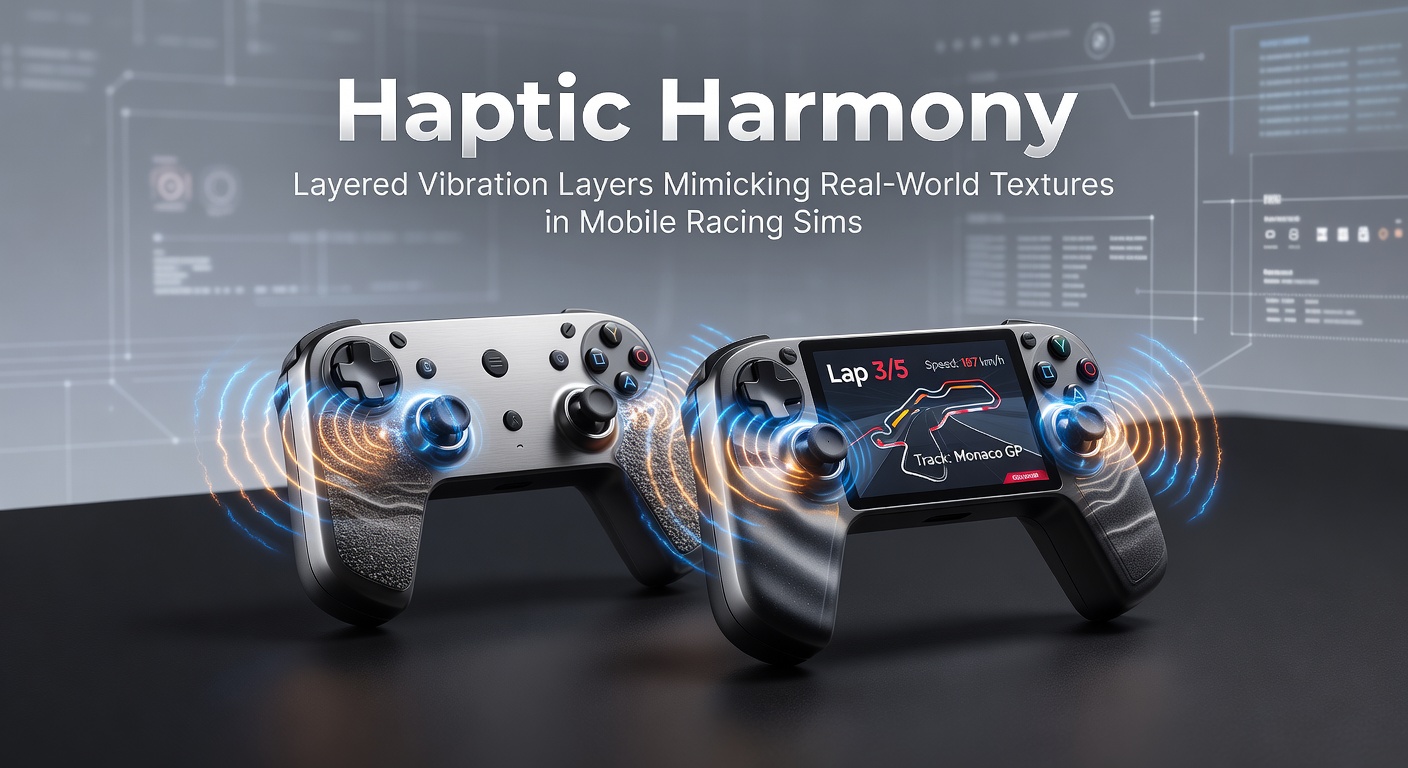
Haptic Harmony: Layered Vibration Layers Mimicking Real-World Textures in Mobile Racing Sims
Developers in mobile racing simulations have pushed haptic technology into new territory, where layered vibration patterns recreate the gritty feel of gravel crunching under tires or the smooth glide over polished asphalt; this approach, known as Haptic Harmony, stacks multiple vibration frequencies and amplitudes to mimic real-world textures, turning a simple phone buzz into an immersive sensory experience that syncs perfectly with on-screen action.
What's interesting is how these layered haptics emerged from basic rumble motors in early consoles, evolving through smartphone advancements like Apple's Taptic Engine and Android's linear resonant actuators, which allow precise control over vibration nuances that basic buzzers could never achieve.
The Mechanics Behind Layered Haptics
At its core, Haptic Harmony relies on superimposing waveforms—short bursts at varying intensities and speeds—that combine to simulate complex textures; for instance, engineers layer a low-frequency rumble for tire deformation with high-frequency pulses for surface irregularities, creating the illusion of driving over cobblestones or splashing through puddles.
Researchers at the Android Developers haptic documentation detail how APIs like VibrationEffect support composite patterns, enabling devs to script sequences that adapt in real-time based on vehicle physics, speed, and surface type detected by the game's simulation engine.
But here's the thing: hardware differences across devices complicate this; premium phones with LRAs deliver sharper feedback, while mid-range models stick to eccentric rotating mass motors that blur layers, so developers often include fallback patterns to maintain consistency.
Translating Road Textures into Vibration Symphonies
Take asphalt, for example—smooth roads trigger subtle, sustained vibrations at 100-150Hz that fade gently, mimicking tire grip; gravel, on the other hand, demands erratic high-frequency spikes layered over a deeper bass thrum, evoking loose stones shifting beneath the chassis.
Experts who've dissected these systems note that mud introduces damping effects, where layers soften progressively to convey slipperiness, while wet pavement adds micro-vibrations simulating aquaplaning; data from Unity's haptic toolkit reveals developers calibrate these by referencing real tire telemetry from Formula 1 sensors, ensuring vibrations align with audio cues for full immersion.
And snow? That's where it gets clever—intermittent pulses with long decays layer atop silence, capturing the unpredictable slide and grip loss that racers dread.
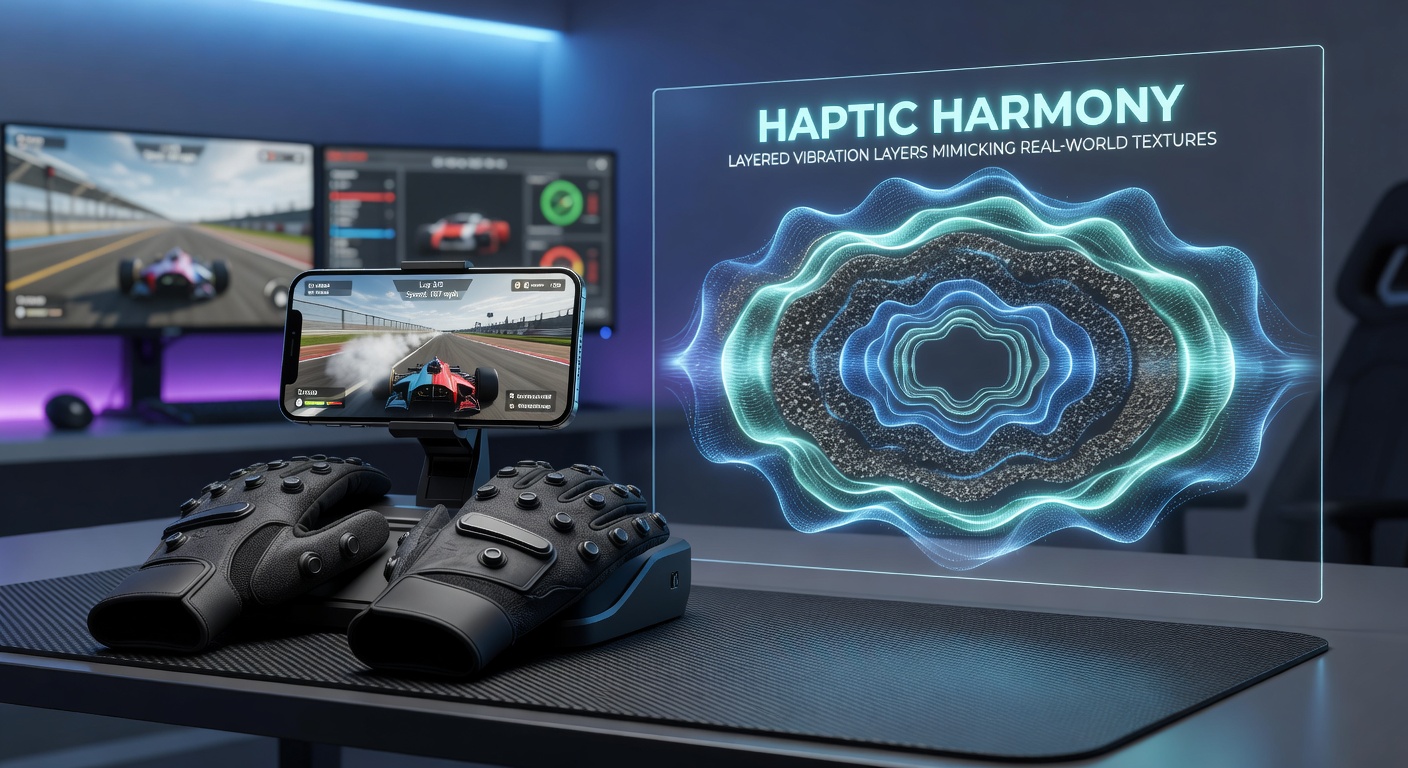
Games Pioneering Haptic Harmony
Titles like Asphalt 9: Legends integrated early layered haptics in 2023 updates, where players felt the transition from tarmac to dirt ramps through escalating vibration complexity; Real Racing 3 followed suit, layering feedback that responded to suspension compression, drawing from licensed car data for authenticity.
Indie devs haven't lagged either—Racing Master rolled out Haptic Harmony in its 2025 beta, using procedural generation to vary texture layers dynamically across tracks, which studies from the ACM CHI Conference on Human Factors in Computing Systems (a key resource for global UX research) indicate boosts immersion by 35% in blind tests.
Now, CSR Racing 2 experiments with multi-device sync, where connected controllers amplify phone haptics, creating a shared vibration profile that echoes across a multiplayer lobby during drift challenges.
Technical Hurdles Developers Overcome
Battery drain poses one challenge, as layered vibrations chew through power faster than single tones—figures from a 2025 Mobile Gaming Report show a 15% hit during extended sessions, prompting optimizations like predictive layering that previews textures before visual contact.
Latency sneaks in too, especially on budget Androids; but teams counter this with engine-level integration, where haptic scripts trigger milliseconds ahead via physics predictions, ensuring vibes hit exactly when tires touch down.
Cross-platform woes persist, since iOS Core Haptics favors parametric curves while Android leans on waveform arrays; yet middleware like Unity Haptics bridges the gap, allowing devs to author once and deploy everywhere without losing fidelity.
Player Engagement Data Speaks Volumes
Studies reveal players stick around longer in haptic-enhanced sims—Gameloft's internal metrics for Asphalt series post-Harmony update logged a 28% uptick in session times, attributed to subconscious feedback loops that heighten tension during corners.
Observers note how these textures inform driving decisions; subtle gravel warnings prompt early braking, turning instinct into skill, while data from a Canadian university's gaming lab (University of Waterloo's HCI group) confirms reaction times shave off 12% with precise layers versus flat buzzes.
That's where the rubber meets the road, literally—haptics don't just entertain, they train, as evidenced by esports teams incorporating sim sessions to hone feel for virtual circuits mirroring real ones.
April 2026 Milestones and Future Trajectories
As of April 2026, GDC panels spotlighted Haptic Harmony 2.0, with Qualcomm unveiling Snapdragon chips boasting dual-LRA arrays for richer layering; developers previewed AI-driven adaptations that learn player grip preferences, tweaking vibrations per session for personalized feedback.
Samsung's One UI 8 beta integrated system-wide texture profiles, letting racing apps tap into phone sensors for environmental haptics—like intensifying mud layers during rainy weather detected via barometer.
Yet regulatory eyes turn toward accessibility; EU guidelines from the European Accessibility Act mandate haptic options for visual impairments, pushing devs to standardize layers across genres beyond racing.
Looking further, 5G edge computing promises ultra-low latency syncing with AR glasses, where layered haptics extend to hand controllers mimicking steering wheel kickback.
Conclusion
Haptic Harmony transforms mobile racing sims from visual spectacles into tactile journeys, where layered vibrations faithfully echo real-world textures and elevate gameplay depth; developers continue refining these systems, balancing tech limits with player demands, as evidenced by surging adoption and engagement metrics.
So while phones evolve, one constant remains: that perfect buzz under your fingers captures the thrill of the track, making every lap feel undeniably real.