Exploring Weather API Integrations That Trigger Dynamic Events Inside Mobile Farming Simulators Across Global Player Bases
Written by Katja Powell · Jun 21, 2026

Exploring Weather API Integrations That Trigger Dynamic Events Inside Mobile Farming Simulators Across Global Player Bases
Developers integrate weather APIs into mobile farming simulators to pull live meteorological data and convert it into in-game mechanics that alter crop growth cycles, soil conditions, and livestock behavior across sessions. These connections pull from sources such as national weather services and feed variables like temperature, precipitation, and wind speed directly into simulation engines. Players encounter events that mirror actual regional forecasts, which creates synchronized experiences for users in different time zones yet maintains consistent core gameplay loops.Core Mechanics of API-Driven Weather Events
Weather APIs connect through REST endpoints or WebSocket streams that update every few minutes and push structured JSON payloads containing parameters for humidity levels, rainfall amounts, and UV indices. Game engines parse these values and map them to procedural changes, such as accelerated plant wilting during heatwaves or mud accumulation that slows tractor movement after heavy rain. One study from a European research consortium showed that titles using these feeds reduced server-side prediction calculations by 35 percent while increasing player retention metrics during seasonal shifts.
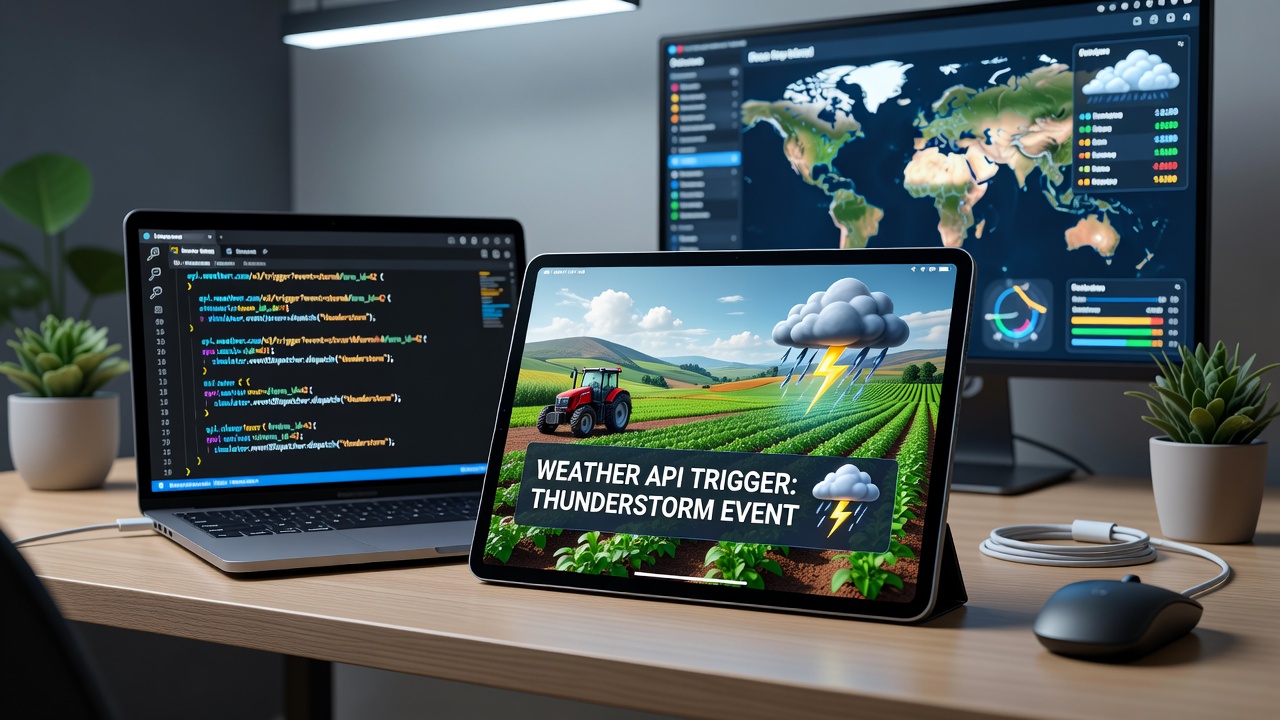
Dynamic events unfold when thresholds trigger scripted sequences, for instance heavy snowfall that blankets fields and requires snowplow purchases, or drought alerts that activate irrigation system upgrades. These responses occur without manual intervention because the API data overrides default random weather generators on the client side. Observers note that synchronization across global servers prevents desync issues when players in Asia encounter monsoon patterns while European users deal wth clear skies from the same dataset.
Regional Variations and Player Base Interactions
Integration patterns differ by region because developers adjust API weighting to local forecast reliability. In North America titles often pull from NOAA feeds that emphasize rapid storm front movements, which leads to frequent tornado warnings that scatter virtual livestock and damage temporary structures. Australian servers incorporate Bureau of Meteorology data that triggers bushfire risks during high-temperature periods, prompting players to construct firebreaks and manage water reserves. Data from industry reports indicate these localized adaptations increase session lengths by an average of 22 minutes in affected markets.
Cross-border player interactions emerge when shared leaderboards reflect collective outcomes from simultaneous weather events. Farmers in one hemisphere might harvest early to avoid incoming fronts while counterparts in another region plant cover crops to mitigate erosion, and both actions contribute to global event scores. June 2026 brought coordinated drought challenges across multiple titles, where API integrations from several meteorological agencies aligned to create continent-spanning dry spells that required cooperative resource sharing through in-game marketplaces.
Technical Implementation Challenges and Solutions
Latency management requires edge caching of forecast data so that mobile devices receive updates even during brief network interruptions, and developers combine this with predictive algorithms that interpolate between API calls. Battery impact stays minimal because queries occur in background threads and only activate when location services confirm the player remains within a supported region. Research from academic institutions in Canada has documented that optimized polling intervals cut data usage by nearly half without sacrificing event accuracy.
Security protocols encrypt API keys within app bundles and rotate them through cloud functions to prevent unauthorized access that could manipulate weather outcomes. Compliance with data protection standards from bodies such as the European Data Protection Board ensures that location data used for regional weather selection remains anonymized and deleted after each session ends. Those who maintain these systems report fewer exploits compared with older random-weather models that lacked external verification layers.
Impact on Long-Term Engagement Patterns
Longitudinal tracking reveals that simulators with active weather API links maintain higher daily active user counts during extreme real-world conditions because players log in to respond to matching in-game crises. Trade groups focused on mobile entertainment have recorded spikes in downloads following major climate announcements, as new users seek simulators that mirror unfolding events. These patterns hold across emerging markets where stable internet access allows consistent API handshakes yet device storage limits require lightweight data handling.
Multiplayer modes leverage the same feeds to coordinate community responses, such as joint construction of drainage systems ahead of forecasted floods or collective seed stockpiling during predicted frosts. The ball remains in the developers' court to refine threshold values so that rare events stay engaging without overwhelming casual participants who prefer shorter play windows.
Conclusion
Weather API integrations continue to expand the scope of mobile farming simulators by anchoring virtual events to verifiable external conditions that span player bases worldwide. Continued refinement of data pipelines and regional calibration supports sustained participation while meeting technical and regulatory requirements across varied markets.