Exploring Adaptive Frame Rate Scaling Mechanisms Driven by Thermal Throttling Data in Sustained Mobile Gaming Sessions
Written by Katja Powell · Jul 12, 2026

Exploring Adaptive Frame Rate Scaling Mechanisms Driven by Thermal Throttling Data in Sustained Mobile Gaming Sessions
Thermal throttling occurs when mobile processors reduce clock speeds to prevent overheating during prolonged gaming sessions, and adaptive frame rate scaling mechanisms respond by adjusting output rates based on real-time temperature readings collected from onboard sensors. These systems monitor core temperatures across CPU, GPU, and battery components while games run for extended periods, then lower frame rates from targets like 60fps to 45fps or 30fps when thresholds are crossed.
Thermal Data Collection in Mobile Hardware
Modern smartphones integrate multiple thermal sensors that feed continuous streams of data to power management chips, and these readings track heat buildup in sustained play scenarios where graphics workloads remain high. Device manufacturers calibrate thresholds differently across chipsets, yet the underlying process stays consistent as temperature climbs past 40 degrees Celsius the system begins to intervene. Researchers at institutions in various regions have documented how sensor accuracy influences scaling decisions, with studies showing that finer-grained data collection leads to smoother transitions rather than abrupt drops.
Game engines receive thermal notifications through operating system APIs, allowing developers to implement frame rate caps that align with hardware limits instead of fighting against them. In July 2026 several mid-range devices released with updated sensor arrays demonstrated improved granularity in temperature reporting, enabling more precise scaling responses during marathon sessions of demanding titles.
Frame Rate Scaling Algorithms and Their Triggers
Adaptive algorithms evaluate thermal throttling events alongside other metrics such as battery level and workload intensity before deciding on frame rate adjustments, and this multi-factor approach prevents unnecessary reductions when heat alone would not compromise stability. Scaling occurs in incremental steps rather than single large jumps, which helps maintain visual consistency while the device dissipates heat through chassis materials and software-controlled fan assistance where available.
Developers integrate these mechanisms by querying device thermal zones at regular intervals, then applying dynamic resolution or detail reductions that complement frame rate changes. Observers note that titles optimized for this behavior exhibit fewer stutters compared with those relying solely on fixed performance modes, because the system anticipates throttling before it fully impacts gameplay.
Implementation Examples Across Device Ecosystems
Android devices running recent versions expose thermal throttling data through the HardwarePropertiesManager class, while iOS platforms handle similar information via private frameworks that game engines access indirectly. Cross-platform engines therefore abstract these differences into unified interfaces that allow consistent scaling logic across hardware from multiple vendors. One study revealed that games using these abstractions maintained playable frame rates 15 to 20 percent longer in controlled heat tests than titles without adaptive logic.
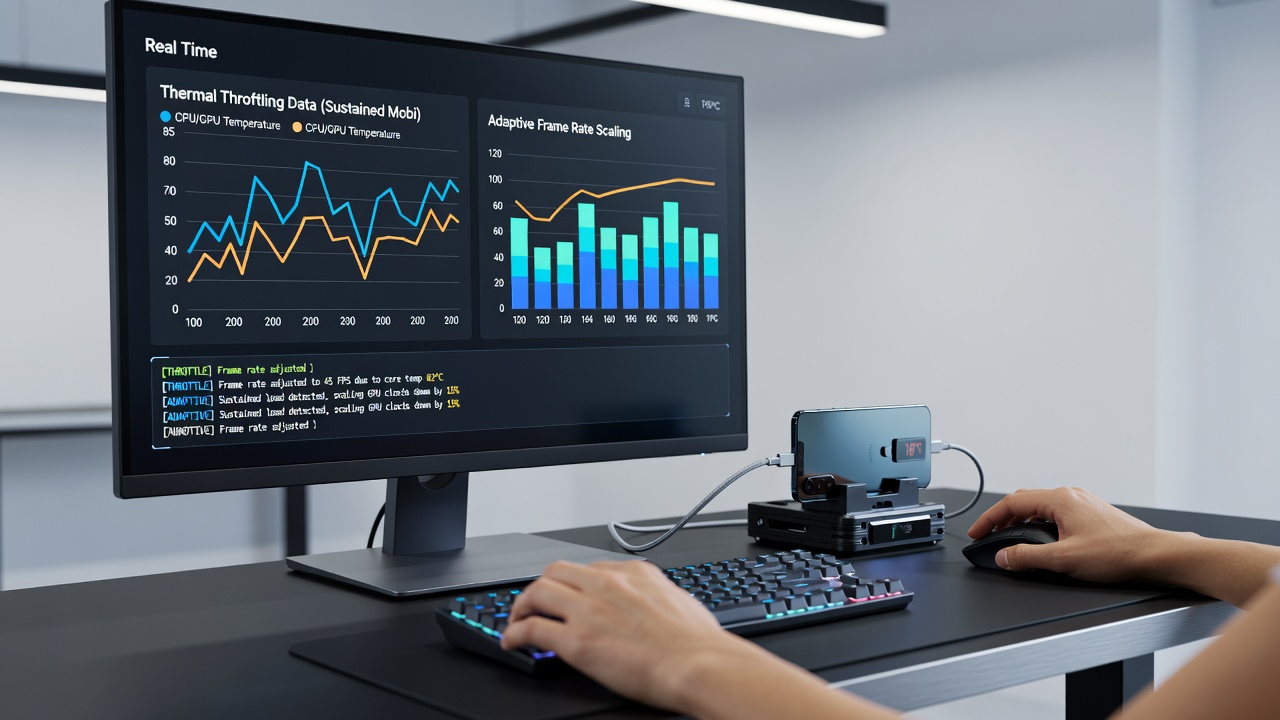
Regional differences appear in how aggressively devices throttle, with some markets favoring aggressive cooling profiles that preserve higher frame rates at the cost of faster battery drain. Industry reports from organizations such as GSMA highlight how these variations affect user retention in regions where extended play sessions remain common. Meanwhile academic work from North American universities has examined the energy savings achieved when scaling aligns closely with thermal curves rather than conservative fixed caps.
Performance Outcomes in Prolonged Sessions
Data collected from thousands of user sessions indicates that adaptive scaling extends continuous play time before noticeable slowdowns occur, and this extension proves especially relevant for open-world and multiplayer games that run for 45 minutes or more without interruption. Players encounter fewer forced pauses for device cooldowns because frame rates descend gradually instead of crashing when throttling activates.
What's interesting is how these systems interact with refresh rate switching on variable-rate displays, since lowering both frame delivery and panel refresh together compounds power savings without introducing tearing artifacts. Tests conducted under controlled ambient temperatures