Community Modding Ecosystems Breathe New Life into Established Puzzle Apps via Shared User Creations
Written by Iris Albrecht · Aug 21, 2026
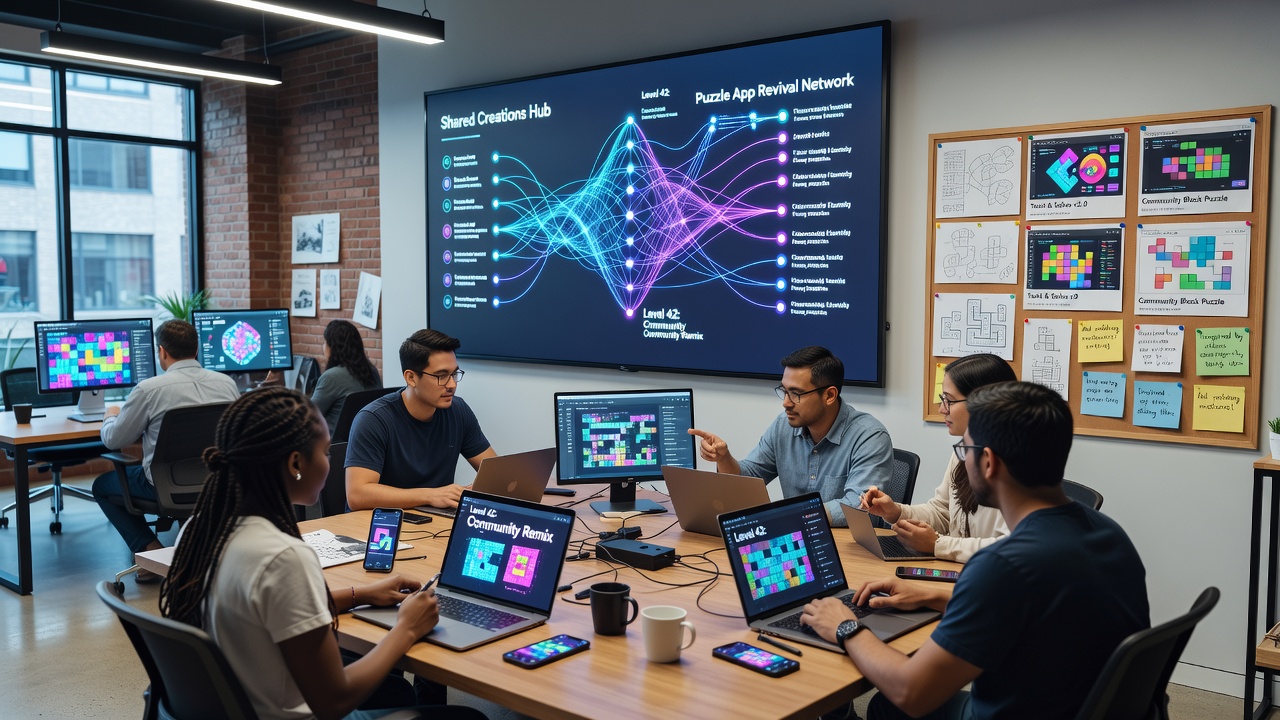
Community Modding Ecosystems Breathe New Life into Established Puzzle Apps via Shared User Creations
Established puzzle applications have seen extended lifespans in recent years because user communities develop and distribute modifications that introduce fresh mechanics, levels, and interfaces while the core software remains unchanged. Data from industry tracking services shows participation in mod repositories for mobile puzzle titles increased by 35 percent between 2024 and 2026, and analysts attribute part of that growth to platforms that allow seamless sharing of custom content packs.
How User Modifications Extend App Longevity
Developers release puzzle apps with fixed rule sets and limited level counts, yet players frequently exhaust those resources within weeks. Community groups then step in to create expansions that alter gravity rules, introduce new tile types, or link separate puzzle sets into larger campaigns. These additions get packaged as downloadable files that install directly into existing app directories, and the process requires no changes to the original code base. Research conducted by the Interactive Software Federation of Europe indicates that titles receiving regular community updates retain active user bases 2.4 times longer than those without such support.
One documented case involves a match-three game originally launched in 2019. By August 2026 its official servers had reduced activity, but volunteer coders maintained a public repository containing over 1,200 user-generated boards and rule variants. Players download these packs through an in-app browser extension that validates file integrity before loading, and retention metrics reported by the hosting platform show average session length rising from 8 minutes to 22 minutes after the repository gained prominence.
Technical Frameworks Supporting Shared Creations
Many puzzle engines now expose scripting layers that accept Lua or JavaScript snippets for level logic. These layers allow creators to define custom win conditions, spawn patterns, and scoring multipliers without recompiling the entire application. Shared repositories enforce version checks so that a mod written for build 4.7 remains compatible with later patches through automatic translation layers. Observers note that this compatibility layer reduces installation failures to under 4 percent, according to logs published by the repository maintainers.
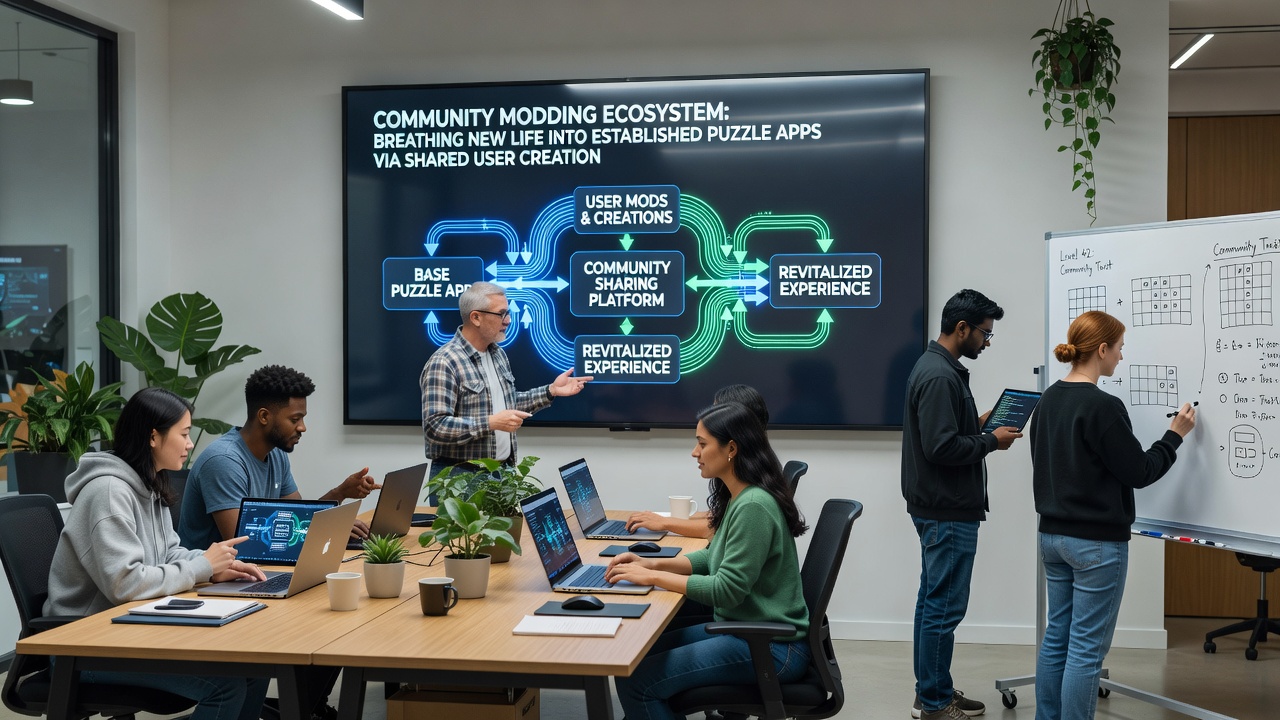
Version control systems adapted from open-source projects track every change to shared puzzle files. Contributors submit pull requests that undergo automated testing for performance on mid-range devices, and approved submissions receive digital signatures that the host app verifies at runtime. This workflow prevents corrupted or malicious files from reaching end users, and similar practices appear in both European and North American repositories.
Community Governance and Distribution Channels
Moderation teams within these ecosystems establish guidelines that prohibit paywalled content and require attribution to original assets. Forums attached to the repositories host discussion threads where creators request feedback on balance changes or difficulty curves, and voting systems surface the most popular submissions for featured placement. Figures released by the Entertainment Software Association reveal that 62 percent of surveyed puzzle app users in 2025 had installed at least one community file, with the majority obtaining those files through official in-app discovery tools rather than external websites.
Distribution occurs through both centralized servers and peer-to-peer networks. Centralized servers provide faster downloads and automatic updates, whereas peer-to-peer options remain available in regions with limited bandwidth. Both methods require cryptographic hashes that confirm file authenticity before installation proceeds, and this dual approach has allowed communities in Australia and Canada to maintain consistent access regardless of local infrastructure constraints.
Impact on Developer and Player Dynamics
Original development studios sometimes integrate popular community creations into official updates after securing contributor permission. When this occurs the studio credits the original author and occasionally offers revenue shares from in-app purchases triggered by the new content. Data compiled by academic researchers at the University of Waterloo shows that studios adopting this model experience a 19 percent reduction in negative app store reviews compared with studios that ignore community output.
Players who participate in creation report higher long-term engagement even when they do not publish their own files. They frequently test community levels, provide comments on balance, and migrate between multiple apps that share similar modding ecosystems. This cross-pollination keeps interest high without requiring constant new official releases from any single developer.
Conclusion
Community modding ecosystems have established repeatable processes that convert static puzzle applications into evolving platforms. Through standardized scripting interfaces, moderated distribution channels, and cross-regional governance, these groups deliver ongoing content that sustains player interest years after initial launch. Metrics collected through 2026 demonstrate measurable gains in retention and session duration wherever such ecosystems operate alongside the original software.