Biometric Data Streams Guiding Real-Time Difficulty Tweaks During Intense Mobile Fitness Challenges
Written by Katja Powell · May 27, 2026
Biometric Data Streams Guiding Real-Time Difficulty Tweaks During Intense Mobile Fitness Challenges
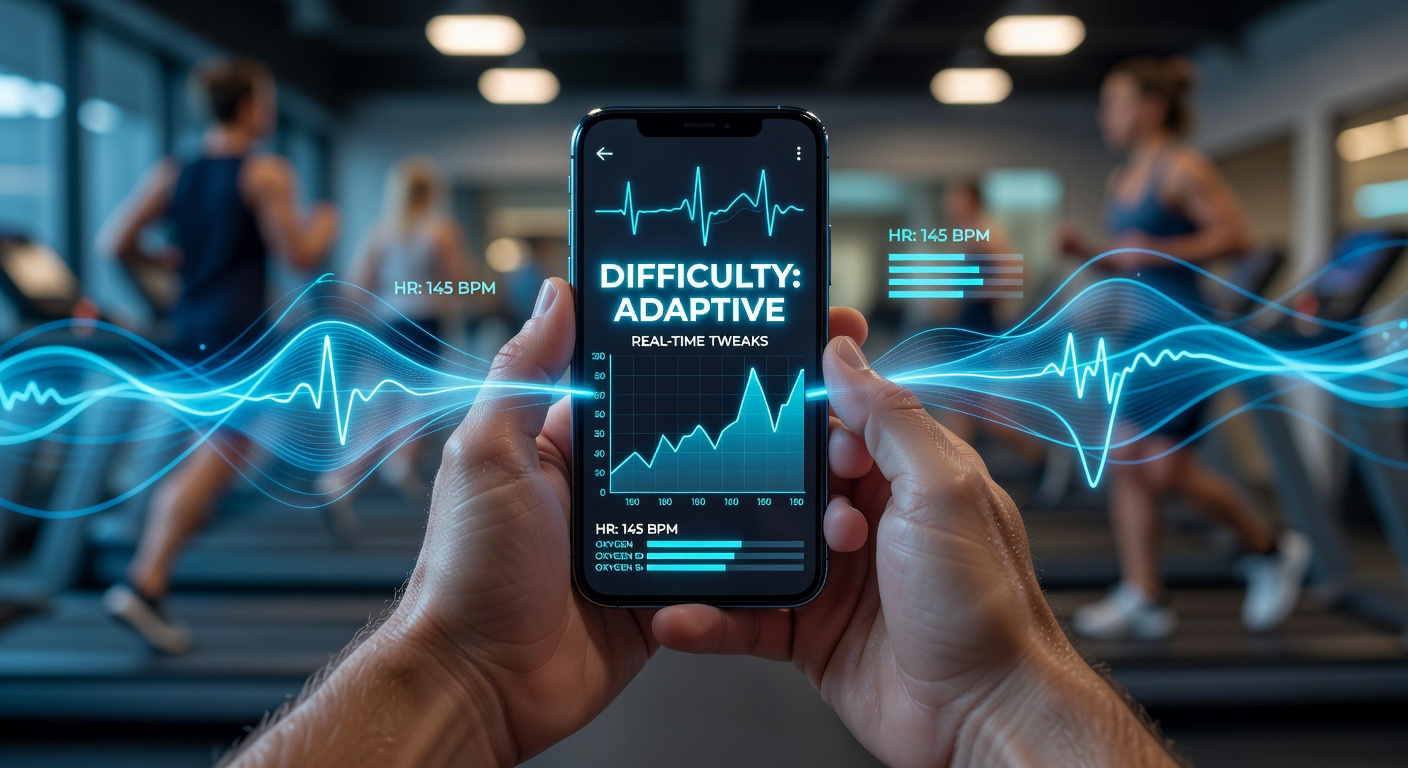
Mobile fitness applications now pull continuous streams of biometric information from wearable sensors to adjust challenge parameters on the fly, and this approach keeps participants engaged while matching physical demands to individual responses. Heart rate variability, skin temperature shifts, and blood oxygen readings feed directly into algorithms that raise or lower resistance, pace targets, or repetition counts within seconds of detecting changes. Developers integrate these feeds through Bluetooth connections that maintain low latency, allowing the system to respond before fatigue markers reach critical thresholds.
Core Mechanisms Behind the Adjustments
Accelerometers and optical heart rate sensors collect data at frequencies up to 100 times per second, then transmit it to the phone's processing unit where machine learning models classify exertion levels. When readings show sustained elevation above a personalized baseline, the app might reduce interval intensity by 15 percent or extend rest periods by 10 seconds. Conversely, stable readings below expected ranges trigger incremental increases in speed or added resistance bands in connected equipment. These tweaks occur without interrupting the session flow, since the interface overlays simple visual cues rather than requiring menu navigation.
Integration with Existing Hardware Ecosystems
Many users already wear devices that broadcast standardized data packets compatible with multiple platforms. This compatibility lets developers draw from chest straps, earbuds, and smart rings without requiring dedicated hardware purchases. Software development kits from sensor manufacturers provide standardized APIs that handle calibration across different body types and activity contexts. Studies conducted through university labs have confirmed that combining multiple signal sources improves prediction accuracy of upcoming fatigue by roughly 25 percent compared with single-metric tracking.
Application in High-Intensity Challenge Formats
Live leaderboards in group challenges incorporate individual biometric profiles so that rankings reflect relative effort rather than absolute output alone. A participant maintaining 85 percent of maximum heart rate for the prescribed duration earns equivalent points to someone pushing closer to their limit under different physiological conditions. Event organizers schedule these sessions during peak usage windows, and May 2026 updates are expected to introduce synchronized global challenges that align time zones through cloud-based biometric normalization. Developers have tested these features in closed beta groups where retention rates remained stable across varied fitness backgrounds.
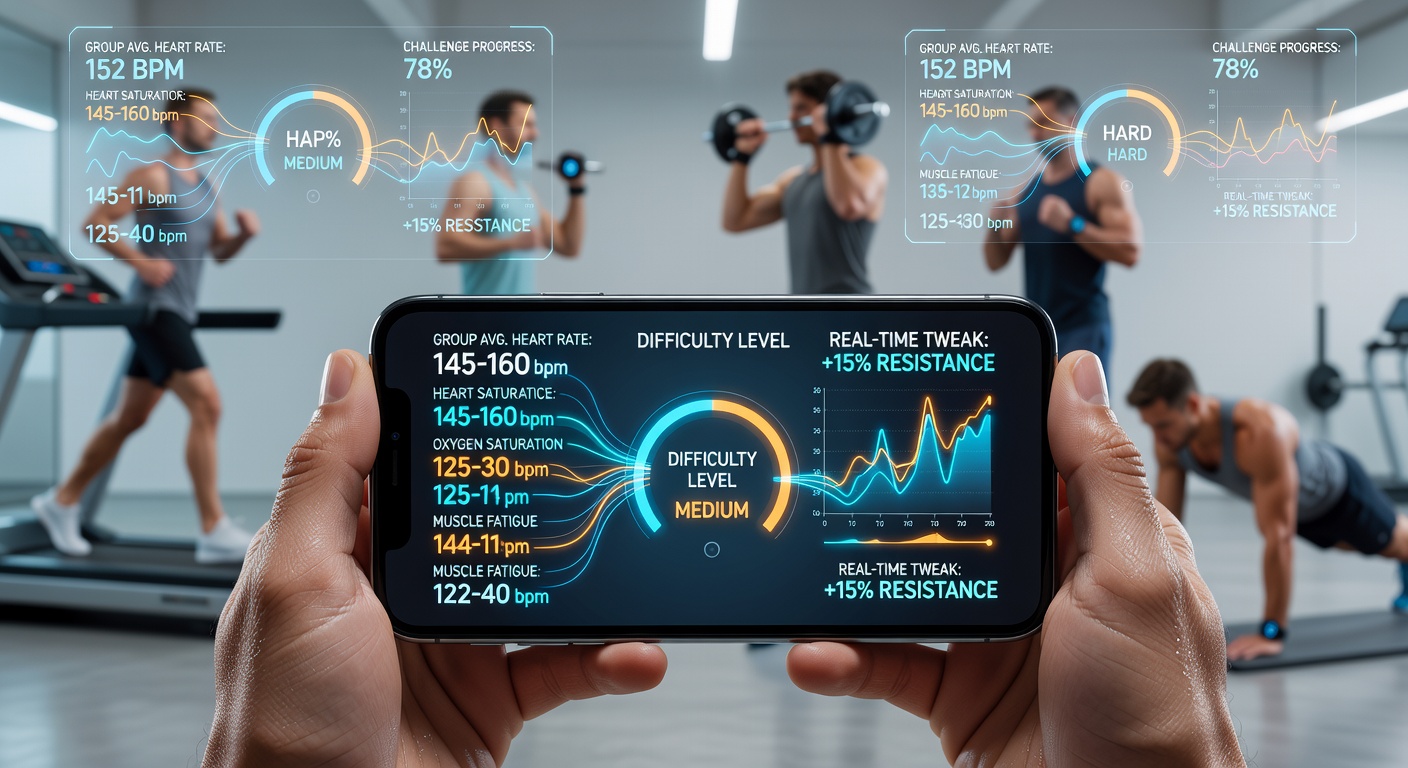
Turns out that real-world deployments often reveal edge cases where environmental factors such as heat or altitude influence sensor readings, prompting additional layers of contextual filtering within the adjustment logic. One documented case involved a desert-based challenge where elevated skin temperature readings prompted earlier cooldown phases, preventing overexertion while preserving overall session completion rates.
Research Findings and Performance Metrics
Data compiled by the National Institutes of Health indicates that programs using adaptive biometric guidance report higher adherence over eight-week periods than static difficulty settings. Participants in monitored groups completed an average of 4.2 additional sessions per month, with fewer reported instances of delayed onset muscle soreness. Separate analysis from the Australian Institute of Sport has examined how continuous oxygen saturation monitoring correlates with sustained power output during repeated sprint intervals, showing measurable improvements in recovery speed when difficulty scales automatically.
Observers note that privacy protocols now require explicit consent screens before any data stream activates, and aggregated anonymized datasets feed back into model refinement without exposing personal identifiers. Regulatory guidance from health authorities in multiple regions emphasizes transparent data handling as a prerequisite for commercial distribution of these fitness tools.
Future Refinements Scheduled for Mid-2026
Platform updates planned around May 2026 aim to incorporate additional signals such as electromyography readings from arm-worn sensors, allowing finer control over muscle-specific load balancing. Engineers are also exploring predictive models that anticipate intensity needs based on sleep data collected overnight, shifting baseline difficulty before the session even begins. These expansions build directly on current infrastructure rather than requiring wholesale hardware replacements.
Conclusion
Biometric integration continues to reshape how mobile fitness challenges scale across diverse user populations by anchoring difficulty changes to measurable physiological signals. Continued refinement of sensor fusion techniques and cloud synchronization protocols supports broader accessibility while maintaining safety margins. The combination of established research findings and scheduled platform enhancements points toward sustained growth in adaptive training formats that respond directly to real-time body data.