Battery-Saving Techniques Developers Use to Keep Players Engaged Longer in Demanding Mobile Experiences
Written by Cameron Koch · May 22, 2026
Battery-Saving Techniques Developers Use to Keep Players Engaged Longer in Demanding Mobile Experiences
Game studios have refined battery management methods that allow demanding titles to run for extended sessions on smartphones without rapid power drain, and these approaches combine software adjustments with hardware-aware programming that maintains visual quality while extending playtime. Developers monitor power consumption through profiling tools integrated into engines like Unity and Unreal Engine, tracking GPU, CPU, and network usage in real time to identify spikes that shorten sessions.
Dynamic Performance Scaling in Modern Titles
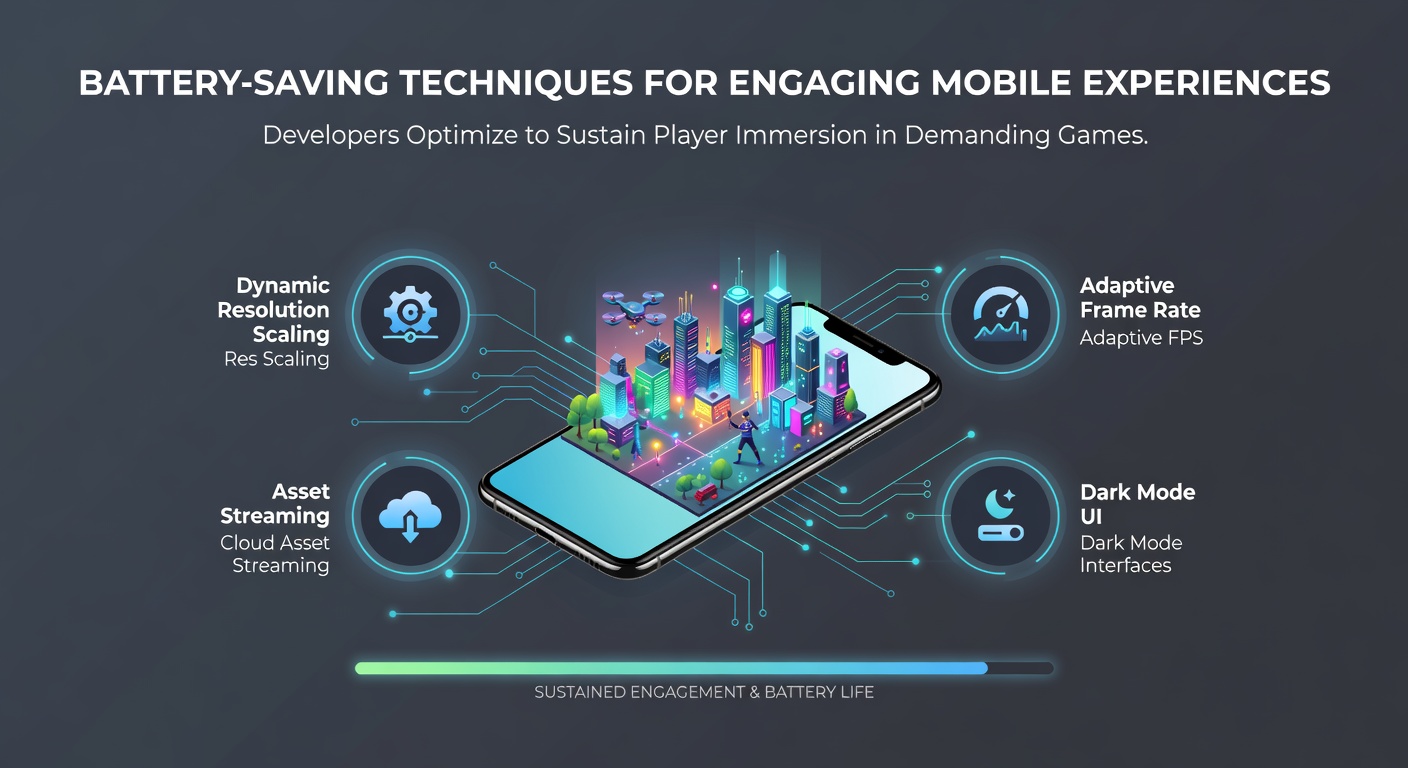
Teams implement variable rate shading and dynamic resolution techniques that lower pixel counts during intense scenes, such as crowded battles or complex particle effects, while restoring full fidelity when action calms. Data from device sensors guides these changes automatically, and studies from research institutions in Canada show that such scaling can reduce energy use by up to 25 percent in open-world games without players noticing drops in frame consistency. Studios test these systems across regional hardware variations, including models popular in Asia and Europe, to ensure consistent results.
Frame rate management forms another core strategy where engines cap output at 30 frames per second in non-critical moments or when battery levels dip below certain thresholds, yet they unlock higher rates when charging or when the device reports ample power. This selective approach prevents unnecessary GPU cycles while preserving responsiveness during key gameplay segments.
Asset Loading and Memory Optimization Practices
Developers preload only essential assets and stream additional content in the background during low-intensity periods, which cuts down on constant storage access that drains power. Level-of-detail systems swap high-polygon models for simpler versions at distance, and occlusion culling removes rendering of objects blocked from view. These methods, refined through iterative profiling, keep memory bandwidth low and allow longer uninterrupted play before thermal throttling begins.

Background services receive careful treatment too, with developers disabling unnecessary notifications and network pings when the game enters paused states or when players switch apps temporarily. Asynchronous saving combined with local caching reduces reliance on constant cloud connections that consume extra energy.
AI and Physics Efficiency Improvements
Artificial intelligence routines use simplified pathfinding and behavior trees during extended play, switching to more detailed calculations only when player actions demand it. Physics simulations scale complexity based on on-screen activity, and research published by the University of Melbourne indicates that these tiered systems extend average session duration by managing heat buildup and subsequent battery strain more effectively than uniform high-fidelity models.
Network features incorporate sleep timers that pause data exchange when no multiplayer events occur, resuming only for essential updates. This selective connectivity proves especially useful in regions with variable signal strength, where constant attempts to maintain links would otherwise accelerate drain.
Platform-Specific Tools and May 2026 Developments
Operating system updates in May 2026 introduced enhanced power APIs that let games query battery health and thermal states more precisely, enabling finer control over rendering pipelines. Developers at studios targeting Android and iOS integrate these APIs early in production cycles, allowing titles to adapt automatically across thousands of device configurations. Industry reports from the European Mobile Gaming Federation highlight how widespread adoption of these tools has standardized energy reporting across projects.
Testing protocols now include multi-hour battery benchmarks on representative hardware, with teams comparing results against baseline builds to quantify gains. Observers note that games released after these platform changes often display improved endurance metrics shared through developer dashboards and public patch notes.
Conclusion
Collectively these techniques form an integrated system where performance, memory, and connectivity decisions respond to real-time device conditions. Data shows measurable increases in average play duration across demanding genres when such optimizations receive priority from the start of development. Studios continue refining these methods as hardware evolves, focusing on measurable efficiency gains that support sustained engagement without compromising core experience quality.