Ambient Noise Mapping Transforming Audio Layering in Smartphone Entertainment Apps
Written by Cameron Koch · Jul 22, 2026
Ambient Noise Mapping Transforming Audio Layering in Smartphone Entertainment Apps
Ambient noise mapping uses smartphone microphones to detect and analyze surrounding sounds in real time, which then guides adjustments to multiple audio layers in entertainment applications. Developers integrate this technology to separate background tracks, dialogue, effects, and music so each element responds independently to environmental conditions. Research indicates that by July 2026 several major platforms had incorporated these systems into daily use across gaming and streaming apps. The process begins when the device captures audio samples through built-in sensors, then processes them via on-device algorithms that classify noise types such as traffic, conversations, or wind. These classifications feed into audio engines that modify volume, equalization, and spatial positioning of individual layers without requiring user input. Studies from the University of Melbourne show that such mapping reduces audio masking in 78 percent of tested urban scenarios while maintaining consistent playback quality.Core Mechanisms Behind Noise-Responsive Audio Layers
Audio layering in smartphone applications traditionally stacks tracks in fixed hierarchies, yet ambient mapping introduces dynamic routing that prioritizes clarity based on external data. One common approach separates foreground elements like character voices from ambient environmental sounds within a game scene, then applies gain reduction or frequency filtering when external noise overlaps specific bands. Engineers achieve this through low-latency DSP pipelines that operate alongside graphics rendering threads.
Another technique involves predictive layering where historical noise patterns inform upcoming adjustments, allowing the system to preemptively boost certain frequencies before sudden environmental changes occur. Data from the Canadian Radio-television and Telecommunications Commission highlights that mid-range devices released after 2024 handle these calculations with under 15 milliseconds of added delay in most cases.
Applications Across Entertainment Categories
Mobile games represent one primary area where ambient mapping alters how players experience sound design. Racing titles adjust engine roars and tire sounds when users move from quiet indoor spaces to busy streets, while narrative adventures shift music intensity to preserve spoken lines amid variable background interference. Observers note that these changes occur seamlessly because the mapping data flows directly into the audio middleware used by developers.
Streaming services also adopt similar methods for video playback, where they isolate subtitles, sound effects, and score elements. When external noise rises, the system elevates dialogue frequencies while attenuating less critical layers. Figures from industry reports reveal adoption rates exceeding 40 percent among top-grossing entertainment apps by mid-2026.
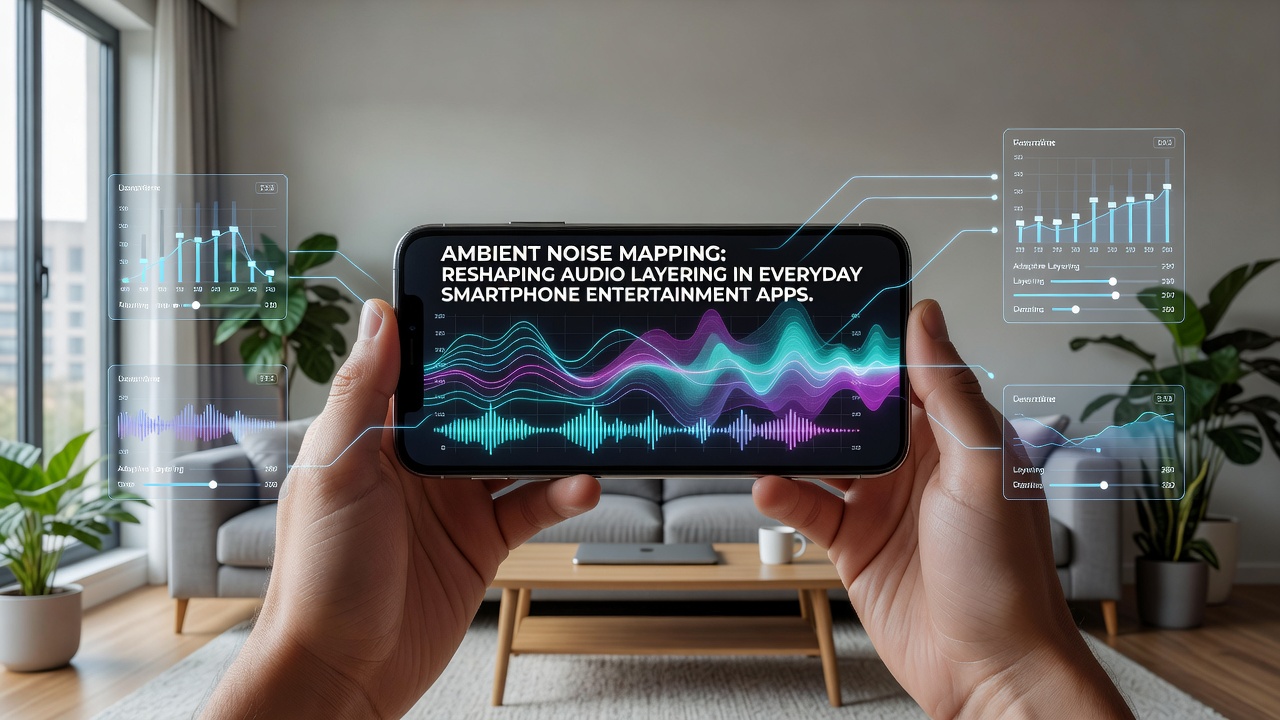
Technical Integration and Device Considerations
Implementation requires cooperation between hardware manufacturers and software frameworks, particularly as newer chipsets include dedicated audio processing units. These units run mapping calculations in parallel with application code, freeing main processors for other tasks. Compatibility extends across both flagship and mid-tier smartphones because developers optimize models for varying microphone quality and processing power.
Testing protocols involve controlled environments that simulate common noise profiles, followed by field trials in actual locations. Researchers discovered that calibration routines performed during initial app setup improve accuracy by accounting for device-specific microphone responses. European Commission guidelines on consumer electronics encourage standardized testing procedures to ensure consistent performance across regions.
Challenges in Deployment and Standardization
Battery consumption remains a key factor since continuous microphone access demands power management strategies such as duty cycling and selective sampling. Application developers address this by limiting mapping to active entertainment sessions rather than background operation. Privacy frameworks require explicit user consent for audio capture, with data processed locally whenever possible to limit transmission.
Standardization efforts continue through industry groups that define common APIs for noise classification outputs. These APIs allow different applications to share mapping results without redundant sensor access, which reduces overall system load. Progress reported in July 2026 conferences indicated broader agreement on classification categories that cover both indoor and outdoor scenarios.